

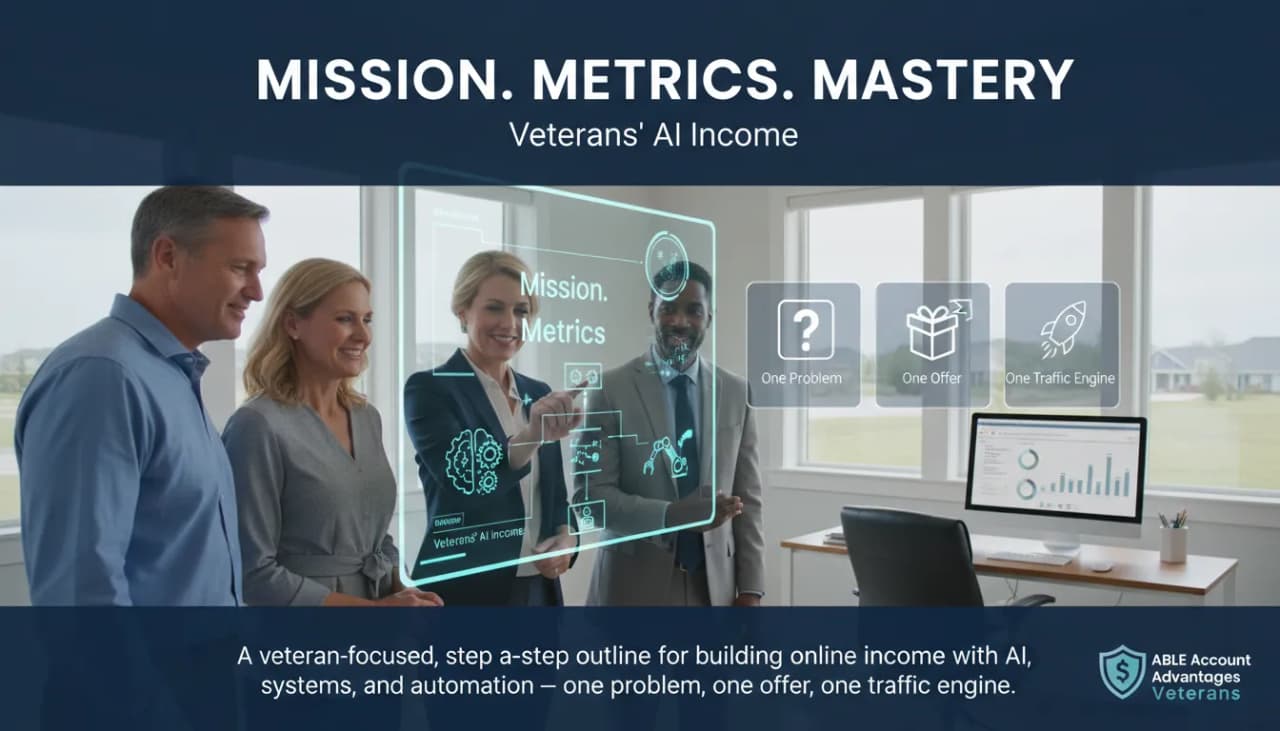
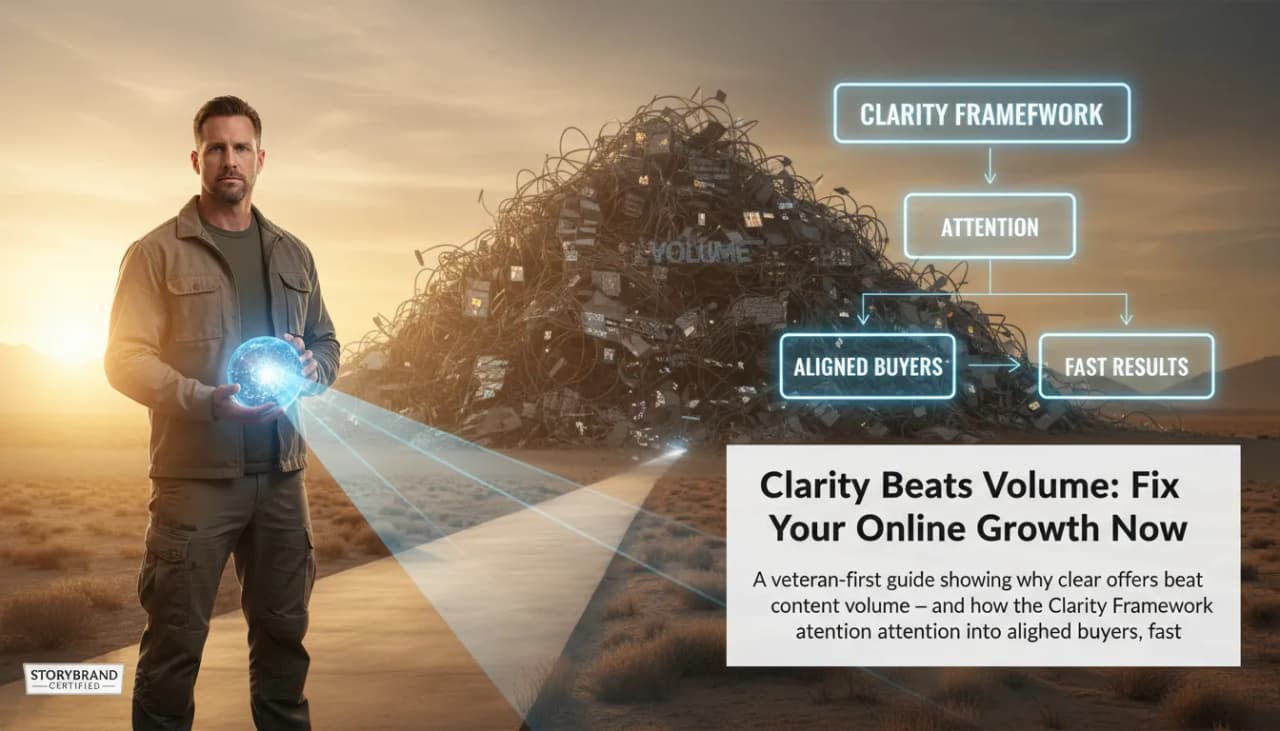
On Friday, February 27, 2026 I spoke as part of Freedom Ops — Veteran-to-Veteran AI Entrepreneur Daily because I wanted to tell a story I live every day: military training didn't just teach me how to follow orders — it taught me how to build repeatable systems. That lesson is crazy useful in the age of AI. This post walks through why veterans are built for AI businesses, how I run mine, and practical steps any veteran can take to turn discipline into revenue.
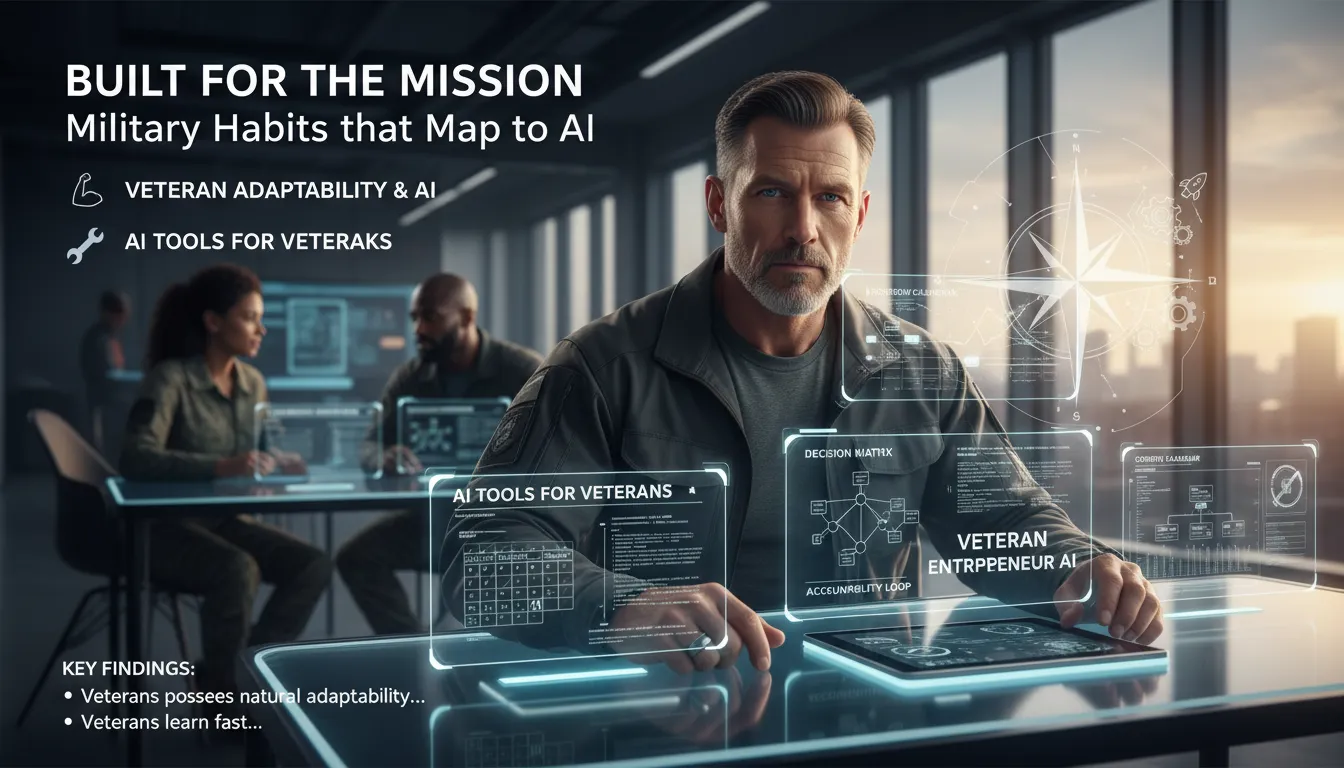
Built for the Mission: Military Habits that Map to AI
On Friday, February 27, 2026, during my Freedom Ops — Veteran-to-Veteran AI Entrepreneur Daily talk, I put words to something I’d been living for months: veteran entrepreneur AI isn’t a trend—it’s a fit. The same habits that kept missions moving in uniform now keep my AI-powered business moving when most people stall out.
Pressure Is Normal When Launch Day Hits
In the military, pressure wasn’t a special event. It was the baseline. Deadlines, limited resources, and zero room for excuses trained me to execute anyway. That’s a direct advantage when a product launch is looming, a client needs revisions, or an ad is burning cash. I don’t need perfect conditions to move. I need a mission and a timeline.
Habit Over Hype: 0500 Discipline Beats “Motivation”
I’ve watched civilians jump into AI with a tutorial binge, try a few prompts, get generic output, and quit. They expected a magic button. I treat AI tools for veterans like any other piece of gear: useful, powerful, but only effective inside a routine.
- Recurring tasks beat random bursts: content drafts, edits, scheduling, follow-ups.
- Accountability beats vibes: I do the work even when I don’t feel ready.
- Systems beat talent: the machine runs because the checklist runs.
Chain of Command Becomes Calendars and Decision Loops
In uniform, clarity came from structure—who decides, who executes, and what “done” looks like. In business, I recreate that with a content calendar, simple decision rules, and review loops. That’s where veteran adaptability and AI shows up: I’m not overwhelmed by options because I operate inside a plan.
| Military Habit | AI Business Translation |
|---|---|
| Brief → Execute → Debrief | Prompt → Publish → Improve |
| Standard operating procedures | Templates, checklists, brand voice docs |
| After-action reviews | Weekly metrics + iteration |
Rapid Upskilling: We Compress the AI Learning Arc
Veterans learn hard things fast because we’ve had to. New duty stations, new systems, new expectations—quickly. AI is the same. Carol S. Dweck said it best:
“A growth mindset accelerates the learning curve — a truth I've seen firsthand among veterans adopting new tech.”
Once I got real exposure and reps, my adoption timeline shrank. The tool didn’t make me consistent—my training did.
Systems Over Hype: Building AI Business Infrastructure
In uniform, I learned fast that motivation is nice, but logistics wins missions. You can have the best plan on paper, but if fuel doesn’t arrive, comms go down, or the supply chain breaks, the mission stalls. That same truth shows up in AI business systems. Content is the new logistics, and your infrastructure is the supply chain for revenue.
Think Logistics, Not Inspiration (Business Planning for Veterans)
Most people try AI like it’s a slot machine: pull the lever, hope for magic. When the output feels generic, they quit. I don’t build that way. My approach is business planning for veterans: set the system, run the system, improve the system. Infrastructure determines outcomes, and the daily, unyielding operation of strong systems delivers consistent results—even when I’m tired, busy, or not “feeling it.”
For Freedom Ops, that means I treat content like a resupply schedule. If I miss a drop, the whole line feels it: fewer leads, fewer replies, fewer sales.
Concrete Infrastructure I Run (Not Just Talk About)
- Content calendar: themes mapped by day, with clear prompts and formats.
- Automated email sequences: welcome series, follow-ups, and weekly value emails.
- Platform-specific posting plans: one idea, repurposed with rules for each channel.
- Simple review loop: AI drafts, I edit for judgment, voice, and accuracy.
Russell Brunson said it cleanly in Traffic Secrets (2020):
"Filling funnels starts with predictable systems, not one-off hacks."
Avoid Shiny-Object Syndrome
I’ve watched entrepreneurs bounce from tool to tool like they’re chasing the next “secret.” In the military, we didn’t swap radios mid-mission because a new model looked cool. We kept comms stable. Same here: I’d rather run a “boring” funnel every day than rebuild my stack every week.
Measure What Breaks: Fix the Supply Chain First
When revenue dips, I don’t panic—I troubleshoot. If a funnel stops, revenue stalls. So I check the system in order: traffic, opt-in, emails, offer, follow-up. VA resources matter here too. The VA’s 2024 entrepreneurship support and VA's Strategy for Adopting modern tools helped reinforce what I already believed: dependable systems beat hype, and repeatable processes protect the mission.
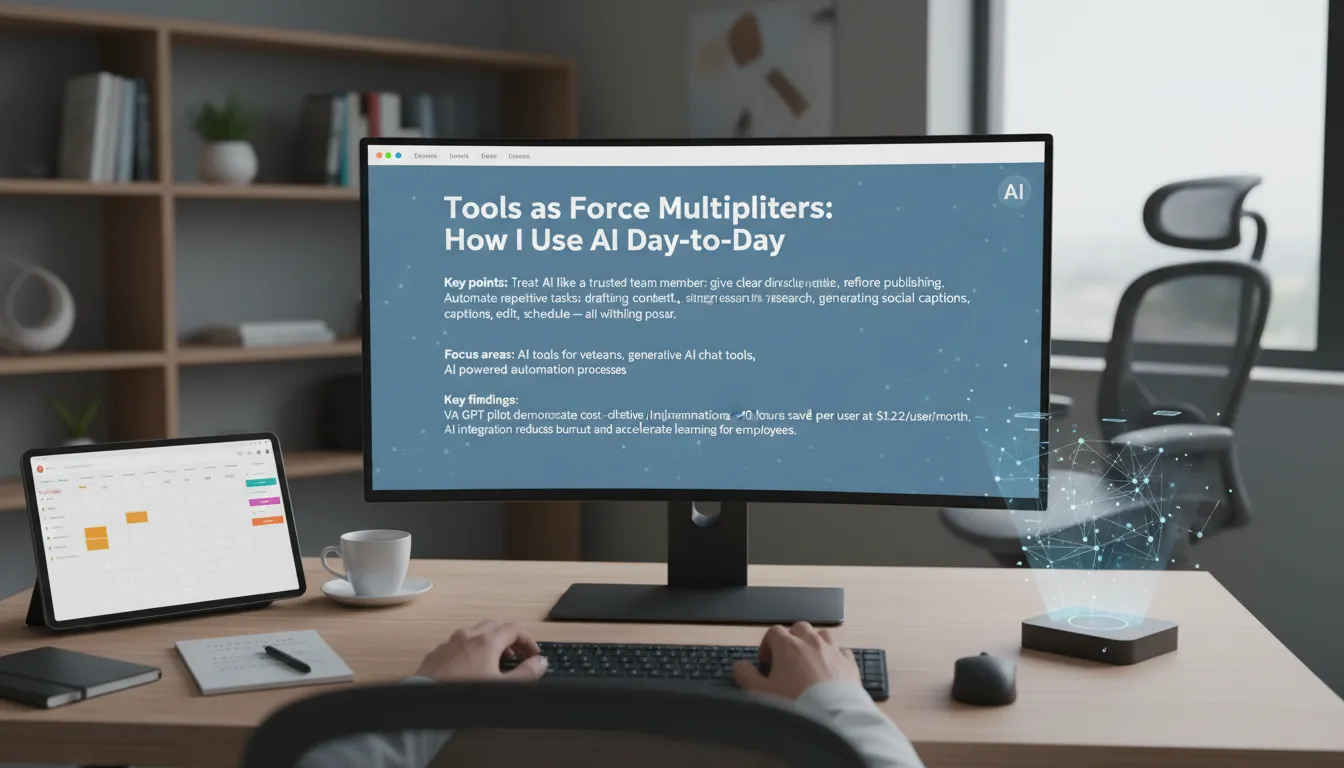
Tools as Force Multipliers: How I Use AI Day-to-Day
In uniform, I learned fast that tools don’t replace training—they multiply it. Radios, checklists, comms plans: they made good teams faster and mistakes rarer. That’s exactly how I treat AI tools for veterans today. Not as a magic button, but as a capable teammate that works at machine speed while I keep command and control.
Generative AI Chat Tools as a Trusted Team Member
My day-to-day starts with generative AI chat tools, but I don’t “ask and post.” I give clear direction, like I would in a brief: audience, mission, voice, constraints, and the definition of “done.” Then I review outputs, correct anything off-brand, and refine before publishing. The judgment stays human—always.
U.S. Department of Veterans Affairs: "Expanded access to general-purpose AI tools can streamline daily workflows for VA employees."
That matches what I’ve seen in my own operation. And it’s backed by real-world testing: the VA GPT pilot showed a low-cost way to start—about 10 hours saved per month per user at roughly $1.25 per user per month. That’s not hype; that’s a practical pilot you can measure.
AI Powered Automation Processes I Rely On
I use AI powered automation processes to handle the repetitive work that drains energy and causes burnout—because when the busywork goes down, learning speed goes up.
- Drafting blog sections and email follow-ups
- Summarizing research into bullet points I can verify
- Generating social captions in my voice (then tightening them)
- Scheduling posts and triggering simple follow-on tasks
My One-Hour Content Rhythm (Veteran-Run and Repeatable)
- Check the content calendar (theme is already assigned).
- Prompt the AI with voice rules, audience, and today’s objective.
- Edit like an NCO: cut fluff, add specifics, verify claims.
- Schedule and move on—usually inside an hour.
While that happens, my automated emails keep running, older posts keep pulling search traffic, and short-form clips keep circulating. It’s not hustle. It’s a system.
Guardrails: Governance, Transparency, Oversight
I keep simple guardrails so the tool stays aligned with the mission: I label AI-assisted drafts, maintain a voice checklist, and never outsource final decisions. AI moves the load; I own the outcome.

Security, Trust, and Career Paths: Where Veterans Lead
Security operations and veterans: the mindset transfers cleanly
In uniform, I learned to make calls with incomplete information, then coordinate a team anyway. That’s why security operations and veterans fit together so naturally in AI-driven businesses. When I look at a modern SOC, it feels familiar: alerts come in fast, the situation changes, and the cost of a bad call is real. Veterans with intel and signals backgrounds slide into threat hunting, incident response, and detection engineering because we already think in patterns, anomalies, and intent.
ISACA/Industry experts: "Critical skills for veterans in 2026 include detection engineering and threat intelligence."
Those skills aren’t “nice to have” in AI—they’re the difference between a tool that helps and a tool that quietly leaks risk.
Cybersecurity careers for veterans: SOCs, threat intel, detection engineering
I’ve watched other vets thrive once they realize AI doesn’t remove the need for judgment—it increases it. The best Cybersecurity careers for veterans often sit at the intersection of people, process, and automation:
- SOC analyst roles where triage and calm execution matter
- Threat intelligence work that turns messy signals into clear action
- Detection engineering where you build rules, tune alerts, and reduce noise
Red-teaming AI models will be standard by 2027
In my business, I treat AI like a junior operator: useful, fast, and capable of mistakes. That’s why red-teaming AI models is becoming non-negotiable. By 2027, red-teaming AI models will be as standard as penetration testing—because prompt injection, data leakage, and unsafe outputs are now “attack surfaces.” Veterans are built for this safety-first work: test assumptions, run drills, document lessons, repeat.
AI-assisted identity verification: access up, fraud down
Trust also shows up in how we serve people. AI-assisted identity verification can help veterans access benefits and services faster while reducing fraud. Done right, it’s not just security—it’s dignity: fewer hoops, fewer delays, better protection of personal data.
Policy accelerators: ATO in 60 days and new skill pathways
What excites me is speed. The VA’s accelerated ATO process can enable initial authorization within 60 days, which means pilots can run quickly instead of dying in paperwork. At the same time, the VA plans to expand employee access to general-purpose AI tools—generative chat, summarization, and AI-assisted development—so more veterans in the workforce can build real reps.
And with 25 leading tech companies pledging to support 120 million workers by 2030, the runway for veteran-to-AI transitions is getting longer and clearer.
Closing the Gap: Learning Fast, Teaching Faster
When I watch veterans struggle with AI, it rarely looks like a lack of ability. It looks like a lack of exposure. In uniform, I learned new duty stations fast because I had to—new systems, new people, new rules, same mission. Learning AI tools is honestly less intimidating than showing up day one and being expected to perform by lunch. Once a veteran sees AI in action—drafting a clean email sequence, summarizing research, or turning notes into a post—the adoption curve spikes. The only real gap is seeing what’s possible.
Exposure First: Show the “Why” Before the “How”
I’ve seen programs and partnerships start to bridge this gap, including what’s outlined in the Department of Veterans Affairs’ 2024 Veteran Entrepreneurship Resources and Transition Support. That kind of support matters because it connects learning to real outcomes: veteran employment opportunities, business ownership, and practical pathways instead of theory.
“AI helps us target help where veterans need it most, faster and more personally.”
— Dixon Center for Military and Veterans Services
That Dixon Center example hits home for me. It’s mission-aligned: predictive analytics and personalized outreach aren’t “tech trends.” They’re a better way to serve people under pressure—exactly what we trained for.
Learning Sprints, Not Endless Courses
I don’t teach AI like a semester-long class. I teach it like a training cycle: brief, focused, measurable. A sprint might be 5 days, one objective, one output.
- Day 1: Pick one role (content ops, security, governance).
- Days 2–4: Build one asset daily (post, SOP, checklist, email).
- Day 5: Review, tighten standards, and ship.
This is where Dweck’s growth mindset becomes real: we don’t “feel ready,” we iterate until we are.
Mentors + Playbooks = Shorter Runway
Pairing veterans with mentors and role-specific playbooks removes guesswork. I lean on playbook thinking like Brunson teaches for traffic-building: clear steps, repeatable moves, and feedback loops. That structure also supports VA employee efficiency gains when teams standardize prompts, QA, and handoffs.
Paid Reps Through veterans skills development programs
The fastest way I’ve seen capability stick is paid, real work: a client newsletter, a compliance draft, a content calendar. Veterans skills development programs tied to deliverables turn “learning AI” into “operating AI,” and that’s when veterans start teaching others even faster than they learned.
Playbook: A Day in My Veteran-Led AI Operation
0500: Mission check (business planning for veterans)
At 0500, I’m not “waiting for inspiration.” I’m running a quick pre-op check. I open my content calendar, confirm today’s theme, and pick one priority mission: one piece of content that moves traffic into my funnel. This is business planning for veterans in its simplest form—clear intent, clear timeline, no drama.
Prompting: Give orders, not wishes (AI tools for veterans)
Next, I brief my AI like I would brief a teammate. I feed it my brand voice, audience, and the exact context for the day. Then I generate a draft and iterate fast. My rule is simple: AI can draft, but I own the judgment and the final call.
“I treat AI like a teammate — it does the maintenance; I keep the mission.”
Here’s the prompt template I reuse:
Role: You are my content operator.

Voice: direct, calm, veteran-led.

Audience: new veteran entrepreneurs.

Goal: one post that drives to my email list.

Constraints: simple language, no hype, include 1 clear CTA.

Governance: avoid sensitive data, cite claims as “estimate” if unsure.

Output: headline + 300-500 words + 3 social captions.
Publish & schedule: One-hour loop, no burnout (AI business systems)
I keep the whole loop to about one hour: draft, human review, tighten the hook, add a CTA, then schedule across platforms. This repeatable loop sustains ongoing content operations and revenue without burning me out. The compounding part comes from my AI business systems: automated email sequences keep running, and older posts keep pulling search traffic while I sleep.
- Quality check: facts, tone, and “would I sign my name to this?”
- Trust check: no private info, no copied text, no weird claims
- Funnel check: opt-in page loads, emails deliver, links work
I’ve watched pilots like the VA’s GPT effort report about 10 hours saved per month per user at roughly $1.25/user/month. That’s the point: time back, not shortcuts on standards.
Weekly metrics review: Fix systems before tactics
Once a week, I review metrics like an inspection: traffic dips, funnel breaks, email open-rate drops, or security flags. If something’s off, I repair the system first—then I worry about new tactics.
Wild Cards: Scenarios, Analogies, and Tactical Failures
AI governance and transparency when the launch goes sideways
Here’s the wild card I plan for every time: it’s launch day, traffic is up, and an AI-generated post goes off-brand. Not “a little rough,” but the kind of tone that makes loyal customers wonder if you got hacked. In that moment, I don’t debate feelings—I execute. I roll back the asset, pause the sequence, and route everything through human review. Then I treat the failure like a training event: I document what happened for AI governance and transparency, and I red-team the prompt that produced it. I ask, “How could this be misread? What inputs would push it into risky territory?” That’s red-teaming AI models in business clothes, and by 2027 it’ll be as standard as penetration testing—meaning it’s not just a task, it’s a hiring and ops priority.
Analogy: AI is a vehicle, not a miracle
I think of AI like a vehicle. Civilians often treat it like a teleport button: type a prompt, arrive at profit. Veterans don’t. We maintain, navigate, and improvise when it breaks. We check fluids before we roll. We know the map, the route, and the fallback plan. That’s where veteran decision-making capabilities show up: calm under pressure, clear priorities, and a bias toward action with guardrails.
The flawed anecdote I still remember
One time, our automated email sequence shipped with a placeholder token still in it—something like {{FIRST_NAME}}. A few subscribers got “Hey {{FIRST_NAME}},” and I felt my stomach drop. No excuses. We stopped the campaign, fixed the template, resent a clean version, and owned it. Then we changed the system so it wouldn’t happen again.
We added a pre-flight checklist for every campaign — fewer surprises, more missions accomplished.
That checklist became our quiet force multiplier: human review, test send, link check, brand voice scan, and a quick red-team pass for edge cases. It’s the same logic behind fast approvals—like the VA ATO initial authorization within 60 days for pilots—move quickly, but don’t skip controls.
My closing lesson is simple: imperfect systems with checklists beat flawless theory with no execution. AI-powered businesses don’t win by avoiding mistakes; they win by staying mission-ready when the wild cards show up.
