
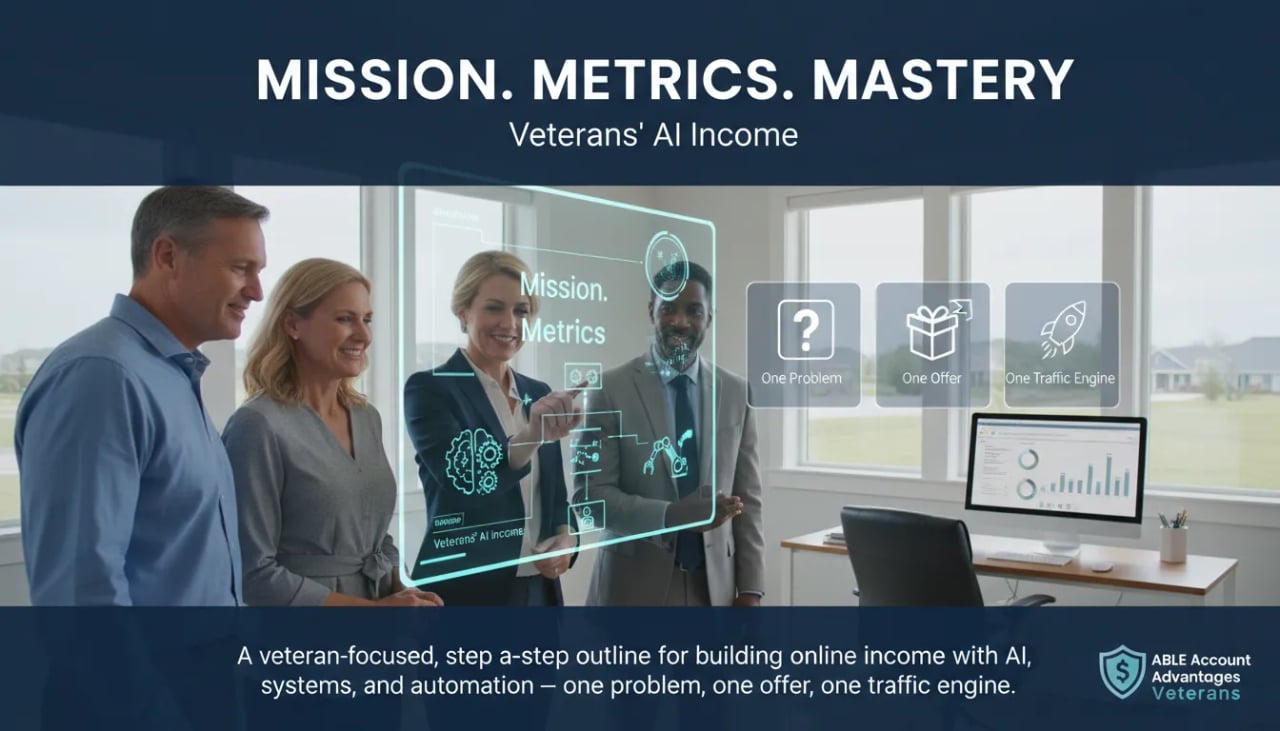
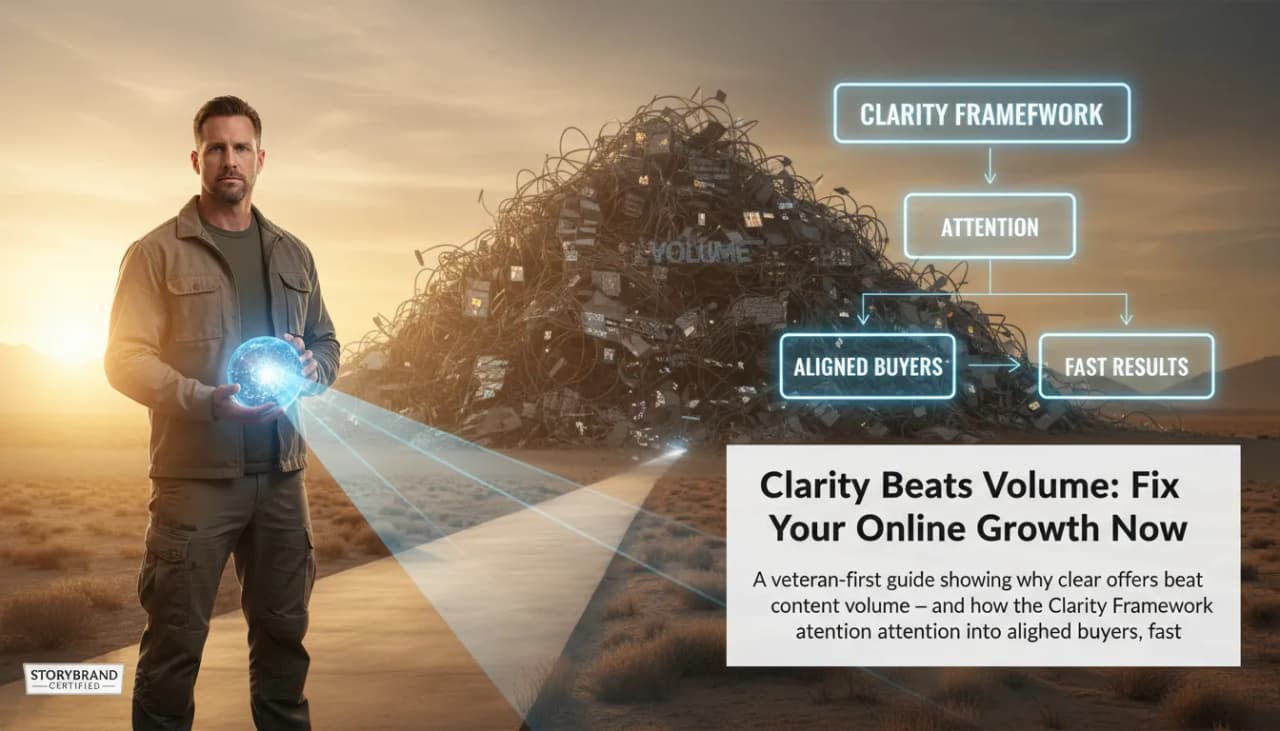

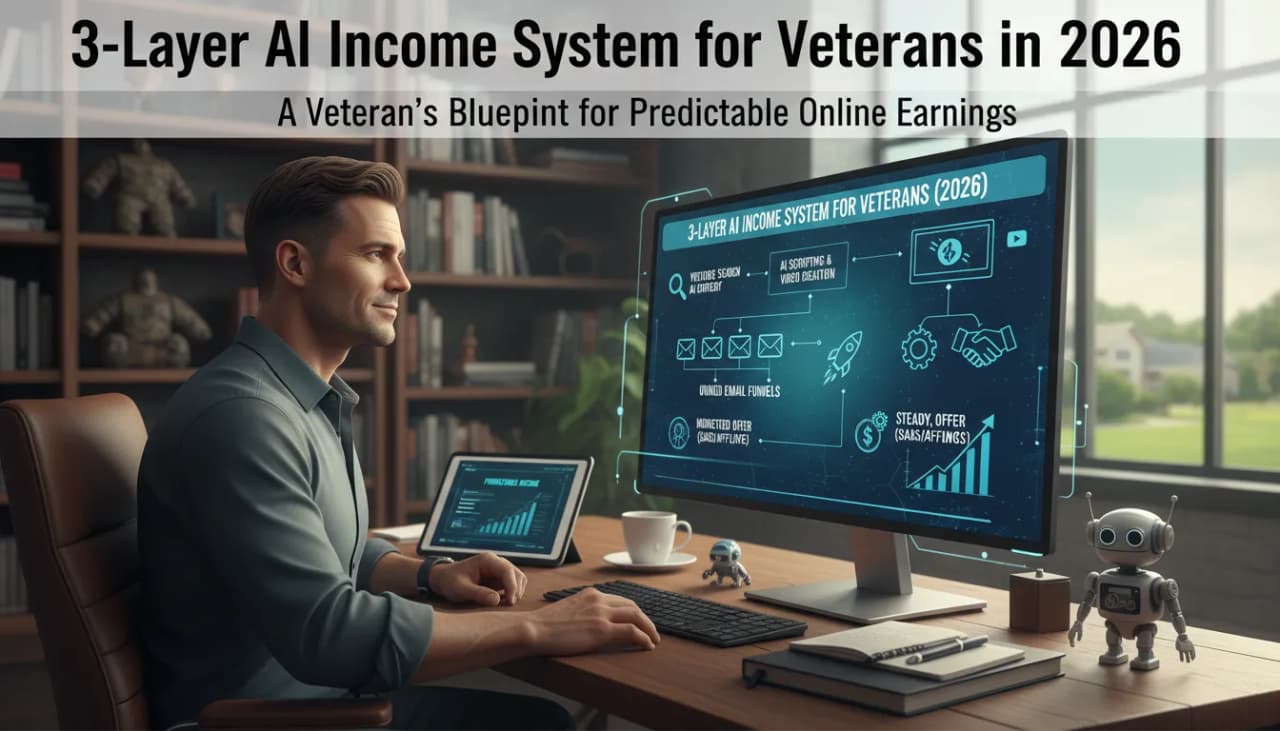
I still remember the day I left active duty: the checklist was done, the duffel bag was packed, and suddenly the world felt like static. In uniform, everything had a process and a purpose. Out here, everyone shouted tactics: "Post more! Go viral!" I learned that those are not strategies — they're noise. In this post I walk through a framework I built for myself and others: mission-style systems that turn military habits into predictable online earnings with AI as a multiplier.
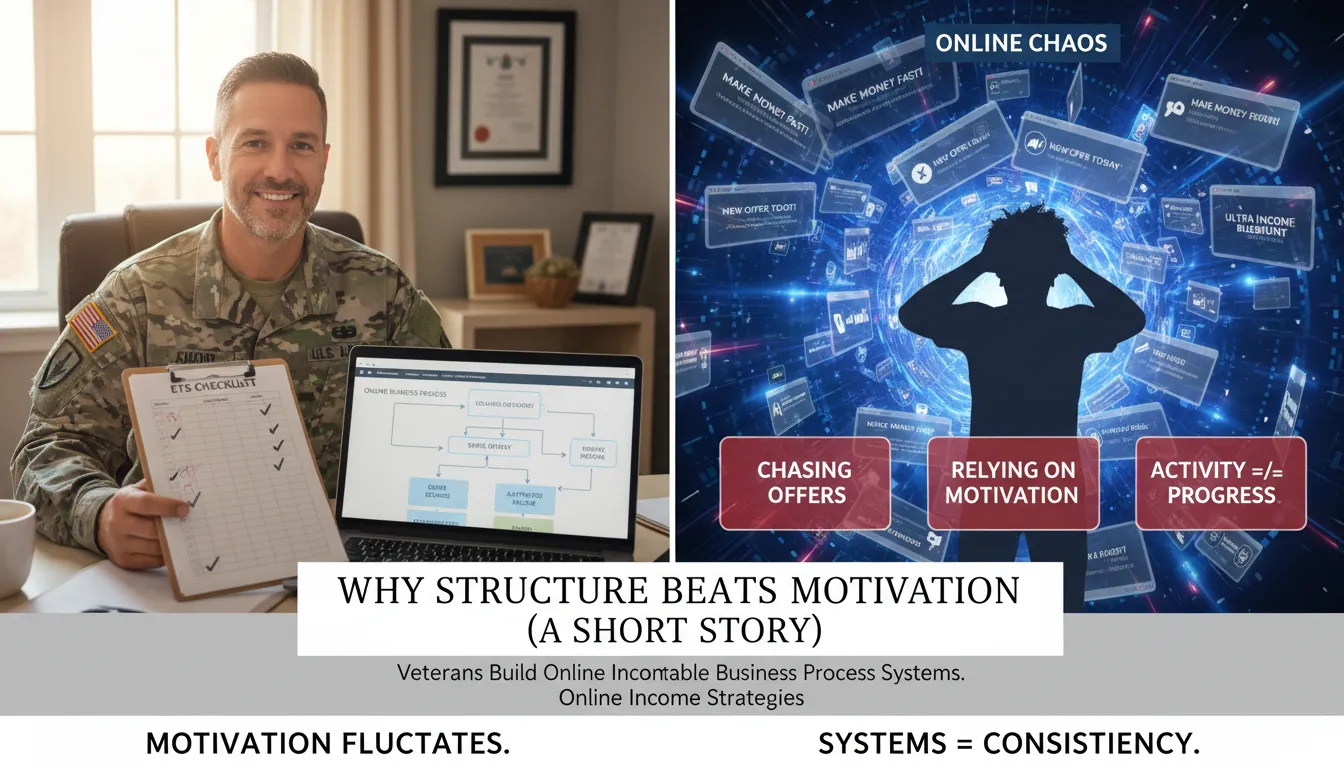
Why Structure Beats Motivation (A Short Story)
ETS Checklists vs. Online Chaos: The Day I Missed the “SOP”
On 2026-02-26, I wrote down something I wish I understood the day I started: transitioning out felt like being dropped into chaos. During ETS, I had a checklist. Dates. Signatures. Clear steps. Even when I was tired, the process carried me.
Then I tried to build online income. No checklist. No chain of command. Just loud advice: “Post more.” “Go viral.” “Manifest it.” That wasn’t a plan. That was noise. And without structure, I felt my focus leak out every day.
The Three Mistakes I Watched Veterans Make (And I Made Them Too)
When I started talking with other vets trying to learn AI, affiliate marketing, and automation, I saw the same pattern. These weren’t lazy people. They were disciplined. But discipline without a target turns into frustration.
Chasing multiple offers
One week it was Amazon affiliates. Next week it was a course. Then a new “AI agency” model. Nothing had time to work.Relying on motivation instead of systems
Motivation showed up on Monday and disappeared by Thursday. That’s normal. But the business plan depended on hype.Confusing activity with progress
Posting daily felt productive, but there was no metric tied to it. No lead goal. No conversion check. Just motion.
This is where many Veterans build online income the hard way—by working hard in the wrong direction.
Repeatable Business Process Systems: What the Military Already Taught Us
In the military, we didn’t “feel like” doing an SOP. We ran it because it was repeatable and measurable. You could hand it to someone new and still get a clean result. That’s the same mindset behind Repeatable business process systems online.
Here’s what changed everything for me: I stopped asking, “What do I feel like doing today?” and started asking, “What does the process say?”
Objective: one painful problem to solve
Role: my job is traffic + follow-up, not “try everything”
Metric: leads, replies, clicks, calls booked
System: the same steps, run daily or weekly
Motivation Is a Spark; Systems Are an Engine
Motivation is real—but it fluctuates. Systems don’t. When I depended on hype, I burned out, doubted myself, and almost quit. When I depended on structure, I measured data, adjusted, and stayed consistent.
In the first 1–2 weeks, I focused only on building the process: one offer, one traffic lane, one follow-up routine. Then I gave myself a 4–12 week proof window to document what worked.
Sarah M. Ellis, Veteran Business Mentor: "Structure turned my scattershot ideas into measurable wins — I stopped guessing and started scaling."
That’s the heart of Veterans online income strategies: Mission. Metrics. Mastery. Not more motivation—more structure.
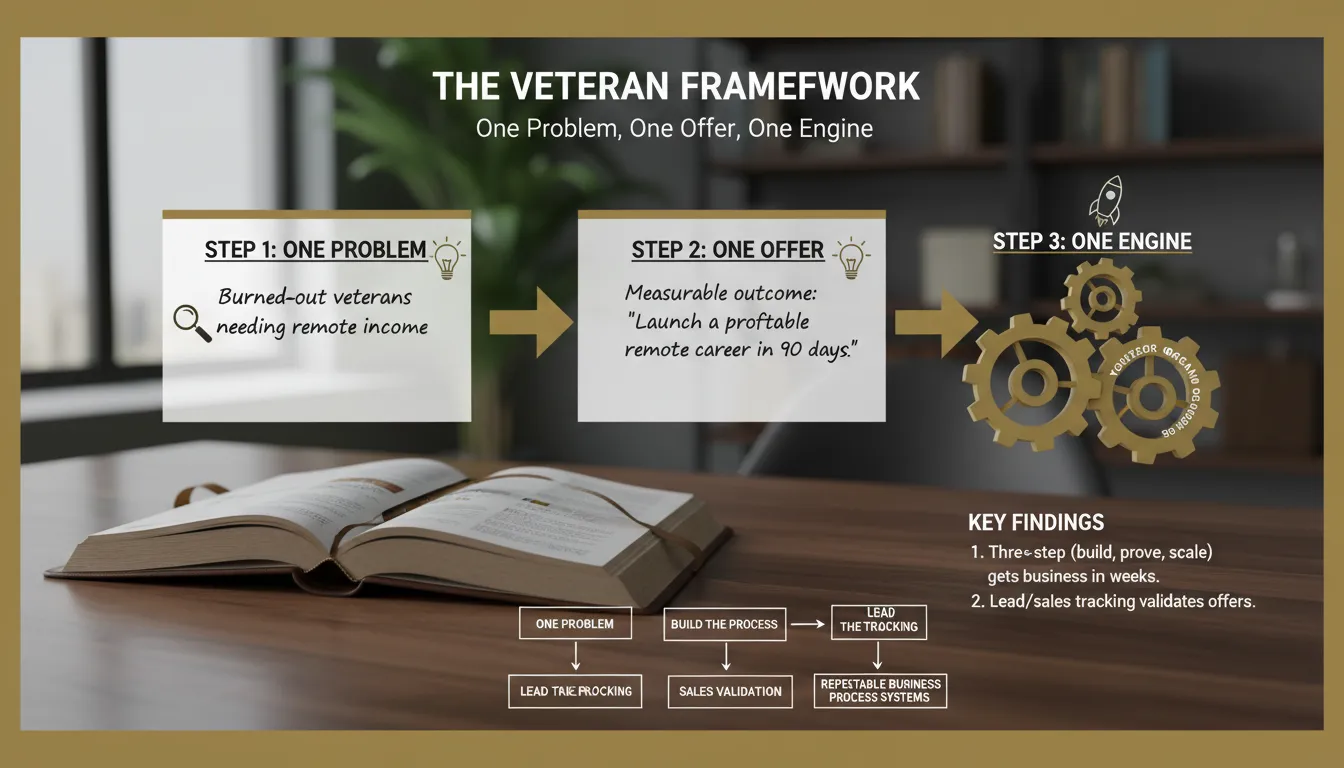
The Veteran Framework: One Problem, One Offer, One Engine
When I left the military, I missed the structure more than anything. Online business felt like noise: “post more,” “go viral,” “try this tool.” That’s not a plan. So I built a framework that works like a mission: One problem one offer, and one engine to drive it. Then I let automation keep me steady when motivation drops.
Step 1: Define One Painful Problem (Hyper-Specific Wins)
“Make money online” is not a problem. It’s a wish. A real problem has a face, a deadline, and a cost. Here are examples I’ve used to stay focused:
Burned-out veterans who need remote income without another high-stress job
Service members preparing for ETS who need a second stream of income fast
Veterans overwhelmed by AI tools who want a simple setup that works
Clarity beats broad promises because it tells people, “This is for you.” It also tells me what to build, what to say, and what to ignore.
Step 2: Build One Clear Offer (Measurable, One Sentence)
Your offer should create a measurable outcome and be explainable in one sentence. If it takes a paragraph, it’s not ready.
Lt. Col. Mark Reynolds, Entrepreneurial Strategist: "If you can’t explain your offer in one sentence, customers won’t either — clarity is a force multiplier."
Example one-sentence offers:
“I help ETSing service members set up a simple AI-assisted affiliate system that generates their first 10 leads in 14 days.”
“I help burned-out veterans build a weekly content system that produces consistent inbound leads.”
This is where lead tracking sales validation starts. If you can’t measure the result, you can’t improve it.
Step 3: Build One Traffic Engine (Master One Platform)
Pick one engine and commit. Splitting focus across platforms feels productive, but it kills momentum. Mastering one channel is how you create repeatable business process systems.
YouTube search
Facebook organic
Short-form video
SEO blogging
I treat this like training: same reps, same schedule, same standard. That’s how you Build the process instead of chasing luck.
Step 4: Install Follow-Up Automation (Remove Emotion)
Automation standardizes execution. It keeps the mission moving even when I’m tired, busy, or doubting myself. My baseline stack:
Email sequences that deliver value and ask for the next step
AI chat to answer FAQs and route people to the right link
Repurposing workflows that turn one idea into multiple posts
Timeline | Focus | Proof |
|---|---|---|
1–2 weeks | Build the process | Offer + basic automation live |
4–12 weeks | Document proof | Lead and sales tracking shows what converts |
That’s the framework: one painful problem, one clear offer, one traffic engine, and follow-up automation that keeps it consistent.
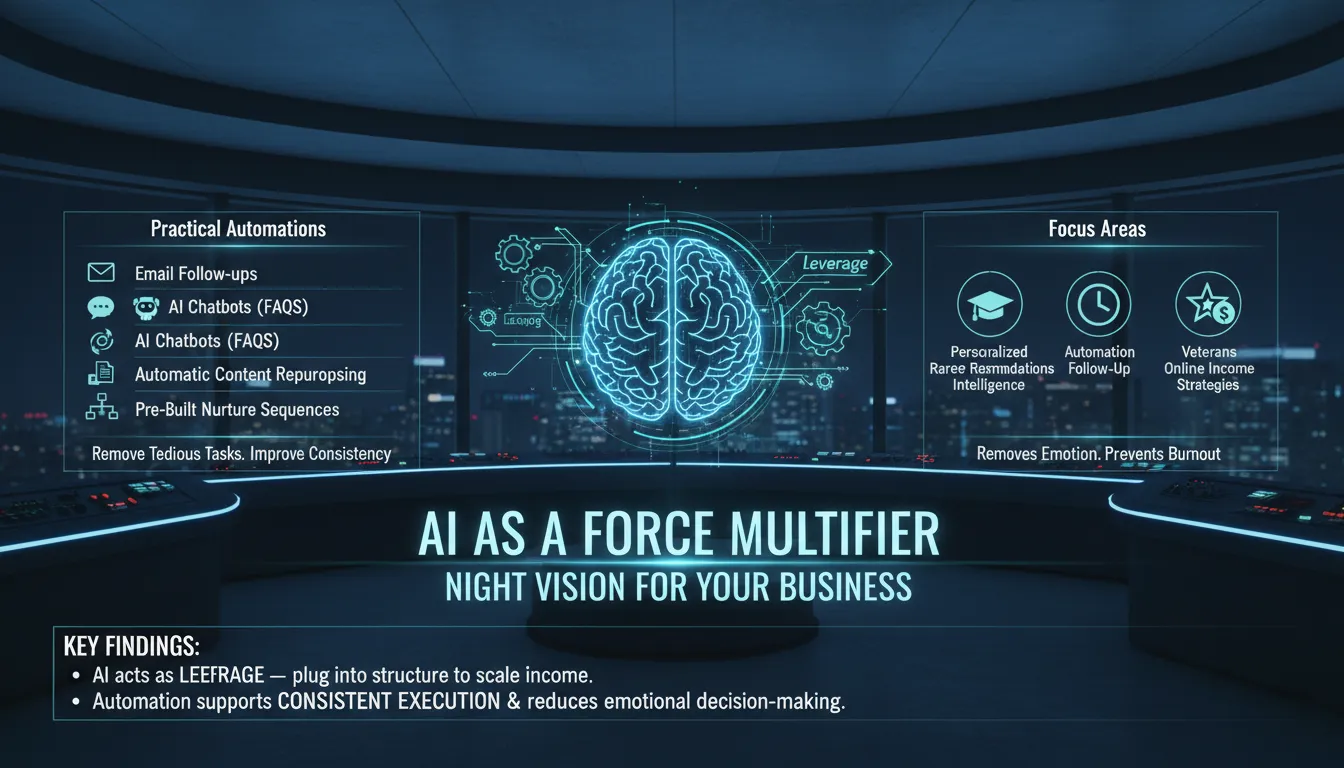
AI as a Force Multiplier (Night Vision for Your Business)
I don’t treat AI like magic. I treat it like leverage. In the military, night vision didn’t replace training—it gave us an edge when conditions got hard. That’s what AI is for business. It won’t “win” for you, but it will help you see clearer, move faster, and stay consistent when your energy drops.
Daniel K. Freeman, AI Integration Consultant: "AI amplifies whatever system you plug it into — make the system first, then add the tech."
Don’t Plug AI Into Chaos
If my offer is unclear, my message is messy, and my schedule is random, AI won’t fix it. It will scale the disorder. I’ve watched people generate 30 posts a day and still make zero sales because they never built a real system. The order matters: mission first, then metrics, then mastery.
Automation Follow-up That Keeps Me in the Fight
The biggest win for me has been Automation follow-up. Follow-up is where sales happen, but it’s also where emotions wreck consistency. When I’m tired, I hesitate. When I’m unsure, I delay. Automation removes that decision-making.
Quick story: I once had a lead click my offer page, then disappear. Old me would’ve shrugged and moved on. But my automated sequence sent a simple check-in email 24 hours later. They replied, asked one question, and bought that night. That sale wasn’t luck—it was a system catching what I almost missed.
Practical Automations I Use (and Recommend)
Email sequences that deliver value and handle common objections
AI chatbots for FAQs so prospects get answers fast, even when I’m offline
Pre-built nurture sequences that guide people from interest to action
Repurposing workflows that multiply reach without multiplying work
Personalized Career Recommendations Intelligence (For the Civilian Shift)
AI also helps with clarity. I can use Personalized career recommendations intelligence to map skills from my MOS into civilian problems I can solve, then shape content around that. It keeps me focused on real needs, not random trends. That focus is the backbone of strong Veterans online income strategies.
Repurposing: One Mission, Many Touchpoints
When I record one long video, I don’t let it die as a single upload. I turn it into shorts, a blog post, and email snippets. Same message, more angles, more chances to be found. That’s how AI multiplies reach without adding equal work.
Small Hypothetical: FAQ Automation Saves Hours
Say you get the same five questions every week. An AI FAQ bot can answer instantly, saving a few hours weekly. More important, it can double follow-up touchpoints by capturing emails and routing people into your nurture sequence—without you lifting a finger.
Resources, Funding & Benefits Veterans Should Know
When I started building AI-powered income online, I assumed I had to “figure it out alone.” That mindset is common in the veteran community—and it slows us down. The truth is, there are programs built to give us structure: mentorship, funding, and benefits protection. The mission is simple: use what’s available so you can move faster with less risk.
Veterans Business Outreach Centers (VBOCs): Your First Stop for Mentorship
Veterans Business Outreach Centers are one of the most practical resources I’ve seen for veterans who want a real plan. VBOCs are local, which matters because you can get feedback from people who understand your region, your market, and your constraints. They’re also a key bridge for the gap most of us face: we can learn tactics online, but we still need help with business setup, pricing, and financial basics.
Rebecca L. Torres, Director at a Veterans Business Outreach Center: "Local mentorship and a clear funding path shorten the path from idea to income."
Training and workshops (business planning, marketing, operations)
Mentorship and counseling (offer clarity, pricing, and next steps)
Guidance on funding routes and readiness for lenders
In 2026, many VBOCs also plug into modern tools—digital infrastructure, virtual reality training, and personalized career platforms—so rural veterans aren’t blocked by distance.
SBA loans veteran businesses can use: Plus SDVOSB and Crowdfunding
If you need capital for software, contractors, or ad testing, SBA loans veteran businesses pursue can be a solid option—especially when you show clean numbers and a simple offer. I treat funding like fuel: useful only after the engine is built.
SBA loans: Great for structured growth when you can document revenue or a clear plan.
SDVOSB certification: If you qualify, it can open set-aside contracts and a clearer path to government buyers.
Crowdfunding: Useful when your story + outcome is clear (and your audience trusts you).
Geography-based incentives to know
State | Incentive | Why it matters |
|---|---|---|
Colorado | Veteran hiring tax credit up to $3,000 per veteran hire | Helps when you’re ready to build a team |
Texas | Incentives for disabled vets and military spouses | Can reduce costs while you scale |
ABLE account financial challenges: Protect benefits while saving
If you’re a veteran with a qualifying disability, an ABLE account can help with ABLE account financial challenges by letting you grow savings tax-free while maintaining benefits. That matters when you’re building online income and your cash flow is uneven. It gives you a buffer without triggering the wrong kind of paperwork stress.
VBBP accredited financial counselors: 3 free sessions
The VA Veterans Benefits Banking Program can connect you with VBBP accredited financial counselors for up to 3 free sessions. I’d use those sessions to tighten the basics:
Debt plan + emergency fund targets
Business banking setup and clean tracking
A simple timeline:
1–2 weeksto build processes,4–12 weeksto document proof
A Simple Roadmap: Build, Prove, Scale
Build the process (1–2 weeks): one problem, one offer, one traffic engine
When I left the military, I didn’t need more “hustle.” I needed a simple three step roadmap I could run like a mission. The Build phase is fast if you keep it tight—most of the system can be set up in 1–2 weeks.
Pick one painful problem you can name in one sentence (example: “veterans prepping for ETS who need a second income stream”).
Craft one clear offer with one measurable outcome (example: “I help you set up a weekly AI content system that generates leads”).
Choose one traffic engine and commit for 30 days: YouTube search, SEO blogging, short-form video, or Facebook organic.
My rule: if I can’t explain the offer in 10 seconds, it’s not ready. Structure wins because it removes emotion from execution.
Prove with data (4–12 weeks): document proof tracking and iterate
Next is the Proof phase. This is where most people quit—right before the numbers start talking. Give yourself 4–12 weeks to validate. Your job isn’t to “feel successful.” Your job is to measure.
I use document proof tracking like a range card: simple, repeatable, and honest. Track leads, conversions, and what content produced them. Here’s a basic weekly scoreboard:
Metric | Target | Actual |
|---|---|---|
Content published | 3–5 | __ |
Leads captured | 10+ | __ |
Calls / DMs | 3+ | __ |
Conversions | 1+ | __ |
conversion_rate = conversions / leads
That one line keeps me grounded. If leads are low, I fix traffic. If leads are fine but conversions are low, I fix the offer or follow-up.
James R. Holloway, SBA Veteran Loan Advisor: "A documented proof of concept is the passport to funding and mentorship."
Scale with mentorship funding: expand with support, not stress
Once proof exists, scaling gets easier—and faster—because you can bring in help and capital. This is where Scale with mentorship funding becomes real: VBOCs, SBA loans, SDVOSB pathways, and veteran mentorship networks can help you hire, run ads, or build better automation. Many VBOCs offer up to 3 free sessions, and local incentives can stack too (example: Colorado’s $3,000 hiring tax credit).
A candid aside: setbacks are after-action reviews
I still take hits. A video flops. An offer doesn’t convert. Instead of calling it failure, I run an AAR: What was supposed to happen? What happened? What will I change next week? That’s how I stay consistent—and how the system keeps moving even when motivation doesn’t.
Conclusion: The Real Escape (And What I Did Next)
Find your path financial by redefining “escape”
For a long time, I thought “escape” meant quitting my job fast. Now I see it differently. The real escape is building income that doesn’t depend on my physical presence—income that keeps moving because the system keeps moving. That means repeatable traffic, simple automation, and clear metrics I can track without guessing. AI fits into that like night vision: it doesn’t win the fight for me, but it helps me see what matters and move with less wasted effort.
Alexandra P. Greene, Transition Coach: "When veterans apply their operational discipline to online business, predictable income follows."
Increase your income investing in the right order
My biggest misstep was trying to do everything at once. I chased two offers, three platforms, and a handful of AI tools. I told myself I was being “productive,” but I was really hiding from the hard part: committing to one lane long enough to measure it. Once I slowed down, I started treating my time like an investment. If you want to Increase your income investing your effort wisely, the order matters: pick one painful problem, write a one-sentence offer, choose one traffic engine, then automate follow-up.
Here’s what I did next. I wrote a single sentence that explained who I help and what outcome they get. I chose one traffic channel I could run even on low-energy days. Then I set up basic follow-up so leads didn’t disappear when life got busy. That’s the point of automation: it removes emotion from execution, and emotion is what used to break my consistency.
Home based business veterans: realistic timelines and proof windows
If you’re building a Home based business veterans can actually sustain, give yourself a real timeline. In my experience, a proof window is usually 4–12 weeks to validate an offer with consistent traffic and honest tracking. Replacing a day job is often 6–12 months, depending on niche and execution. Documentation matters here. I started logging what I tested, what failed, and what moved the numbers—because scaling comes from repeating what works, not from hoping harder.
A wild card scenario (and why it’s not crazy)
I keep thinking about a veteran in a rural town who can’t “network” in the usual way. He builds one YouTube channel around VR training demos for a specific job skill, uses an ABLE account for eligible savings needs, and leans on targeted funding and mentorship. With one clear offer and consistent videos, he replaces his day job in nine months. Not because he got lucky—because he stayed focused, got community support, and ran the same play until the metrics proved it.
If you want to follow my real experiments (including the messy ones), subscribe to the newsletter. I’ll also point you toward community resources like your local VBOC and VBBP centers nationwide. Mission. Metrics. Mastery. Consistency plus systems equals options.
