

When I left the military I expected freedom. What I found was a different kind of system: emails, cubicles, and a rhythm set by someone else. I realized quickly the problem wasn’t my discipline—it was the absence of a system built for the digital economy. In this post I’ll show how to transplant mission planning into an AI business framework that creates real freedom.
1) A Strange Trade: Freedom for Another System
I left the service expecting freedom. I thought I’d finally control my time, pick my direction, and breathe without someone else’s calendar on my back.
“Leaving the military felt like someone unplugged me and plugged me into a new system.” — Jason Van Camp
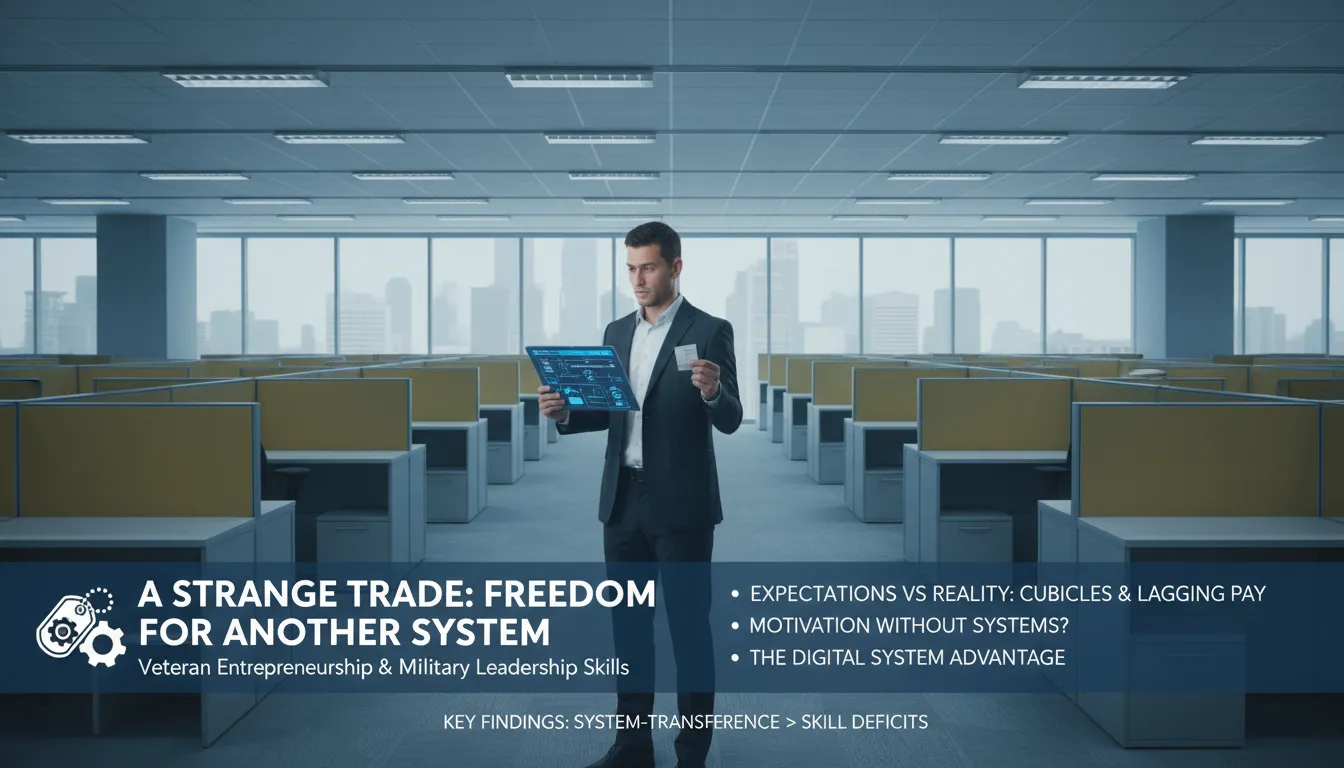
In my first 90 days of civilian life, I treated everything like an observation period. What I saw surprised me. The “freedom” looked like a cubicle, a badge swipe, and meetings that could’ve been emails. The paycheck was steady, sure—but it didn’t feel like it moved with inflation. It felt like running hard just to stay in place.
Veteran Entrepreneurship Starts With Naming the Real Problem
The civilian world kept handing me advice that sounded good but didn’t work under pressure:
- Work harder.
- Network more.
- Stay positive.
- Wait your turn.
No checklists. No clear standards. No repeatable plan. Just motivation and vague career talk—like hope was a strategy.
That’s when the mismatch hit me: in the military, we don’t “feel” our way to results. We use systems. We plan missions. We run SOPs. We execute in sequence. Civilian careers often skip that part and then blame you when you stall.
Military Leadership Skills Aren’t Missing—The System Is
I want to be clear: veterans don’t have an effort problem. Discipline isn’t our weakness. If anything, we bring too much grit into a world that rewards leverage.
The real issue is system-transference. Our skills were built inside one operating system—clear roles, clear timelines, clear feedback loops—and then we’re dropped into another where the rules are fuzzy and success depends on politics or luck.
A Coffee-Cup Moment That Changed My Thinking
One morning I was standing in line with a coffee cup in my hand, staring at my phone like it was a map with no grid lines. And it clicked: I still had mission habits—I just wasn’t using them.
I opened my notes app and wrote a simple cadence like it was an ops order:
- Create: one useful post per day
- Publish: same time every morning
- Review: what worked every Friday
No hype. No waiting for motivation. Just rhythm—content as patrols, consistency as logistics. That small shift showed me how Veteran Entrepreneurship really starts: not by becoming someone new, but by applying Military Leadership Skills to digital systems that actually create options.
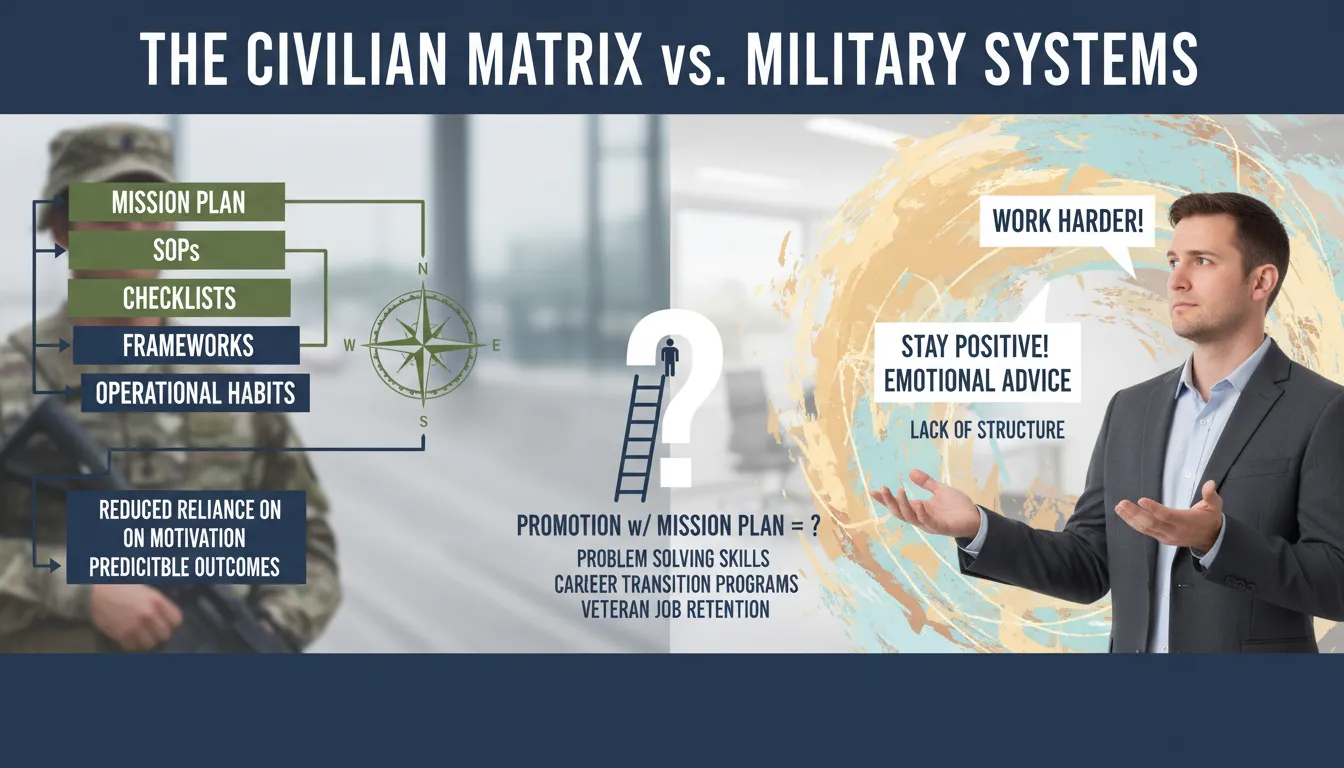
2) The Civilian Matrix vs. Military Systems
When I was in uniform, nothing important ran on vibes. We had checklists, SOPs, mission planning, logistics, and clear communication lanes. If something broke, we didn’t “stay positive.” We ran the process, found the failure point, and fixed it. Those are real Problem Solving Skills—not just grit.
“Systems beat motivation because they run when motivation fades.” — Jason Van Camp
Why civilian career advice feels like a trap (and why it’s not your fault)
The civilian world often hands veterans advice instead of structure:
- Work harder
- Network more
- Stay positive
- Wait your turn
That sounds fine until you realize there’s no shared playbook. No standard timeline. No clear “definition of done.” It becomes emotional and political fast—and if you’re new to those social rules, you can feel like you’re failing at a game nobody explained.
A simple comparison: military systems vs. the civilian Matrix
| Military Systems | Civilian Matrix Pattern |
|---|---|
| SOPs + checklists for repeatable outcomes | Advice-based effort with unclear standards |
| Mission planning with roles and timelines | Promotion paths that change by manager or mood |
| AARs to learn and improve quickly | “Figure it out” feedback after the fact |
The promotion hypothetical: what if it worked like a mission?
If that existed everywhere, outcomes would be predictable—and so would confidence during Career Transition Programs. That’s what systems do: they reduce reliance on motivation and increase predictable outcomes.
Your strategic advantage as a veteran (and why retention improves)
3) The Internet Changed the Game (Not Just Jobs)
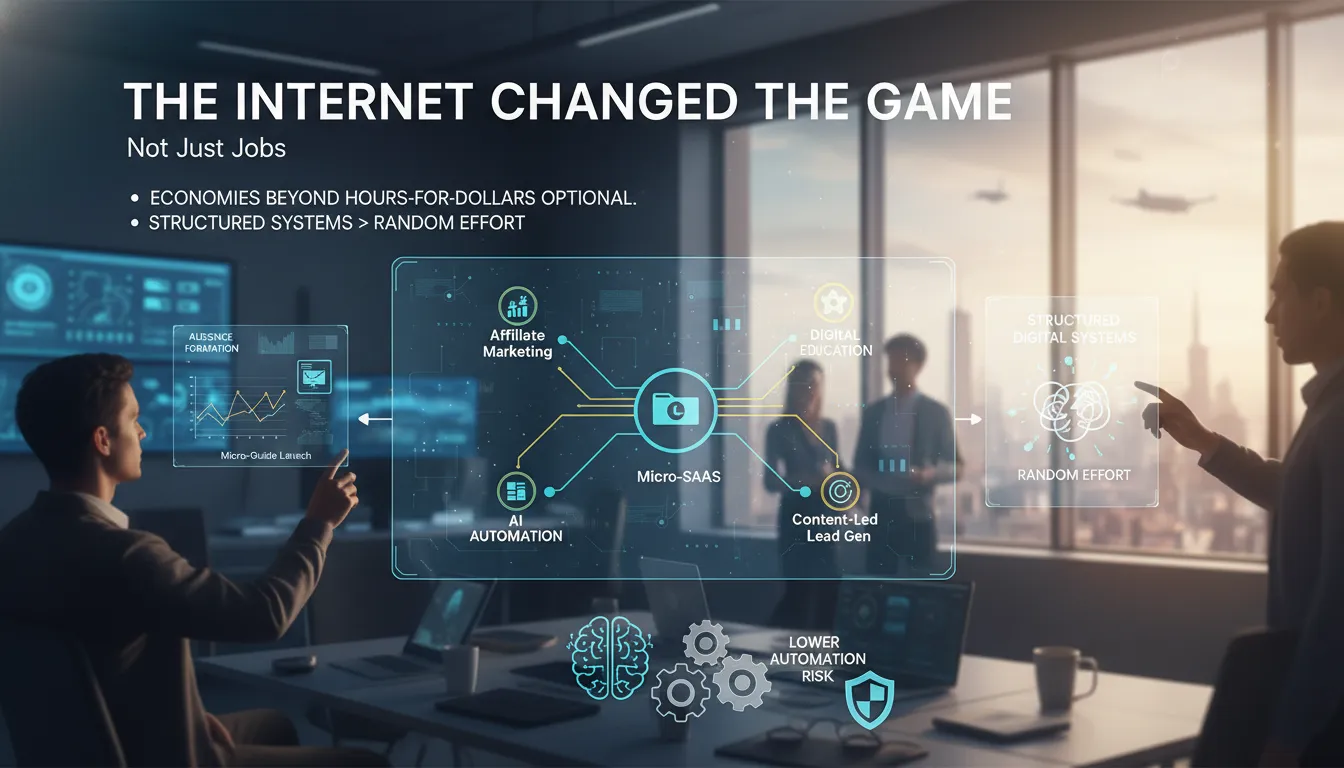
When I got out, I thought the internet was just a faster way to apply for work. I was wrong. The internet didn’t only create new jobs—it created new economic systems. Systems where trading hours for dollars becomes optional, not required.
Technology Startup Ecosystem: New Paths to Value
Inside today’s Technology Startup Ecosystem, you don’t need permission to build. You need a problem you understand and a system that delivers value on repeat. That’s the shift: from “show up and get paid” to “build once and sell many times.”
- Affiliate marketing: recommend tools you trust and earn when people buy.
- Micro-SaaS tools: small software that solves one painful problem.
- AI automation services: set up workflows for businesses that are drowning in admin tasks.
- Digital education businesses: courses, workshops, or micro-guides that teach a clear outcome.
- Content-driven lead generation: content brings leads; your offer closes them.
AI and Machine Learning as a Force Multiplier (Not a Shortcut)
AI and Machine Learning make these models faster to run, but they don’t replace structure. AI can help draft posts, summarize calls, qualify leads, and answer FAQs—but it can’t fix a business with no plan. Digital business models rely on structured systems, not random effort.
“The internet allowed me to turn a problem I knew into a repeatable, scalable offer.” — Jason Van Camp
A Quick Experiment I Ran (Late Night, Real Results)
I tested this with a simple micro-guide—nothing fancy. One night I stayed up past midnight writing it after everyone went to sleep (coffee in hand, tabs everywhere). I posted about the problem it solved and offered the guide for cheap. What surprised me wasn’t the money—it was the audience formation. People replied with their own versions of the same pain point. They asked follow-up questions. They wanted templates.
I learned one big thing: content isn’t “marketing.” It’s reconnaissance. It tells you what people actually need so you can tighten your offer and build something repeatable.
A Warning on Model Selection: Watch Automation Risk Industries
If you want stability, choose models with lower exposure to Automation Risk Industries. Some roles will get squeezed as tools improve. Selecting models with lower automation risk and good veteran retention improves long-term stability—especially when your system depends on skills that stay valuable: trust, leadership, operations, and execution.
No model succeeds by accident. The winners aren’t more motivated—they’re more systematic.
4) The AI Business System: A Digital Mission Plan
I don’t build businesses on hype. I build them like a mission plan: Content → Audience → Offer → Automation → Income. This is the system that keeps me moving even when motivation drops. My personal rule: treat content like recon—gather intel before you ever “engage” with an offer.
Step 1: Content (Recon with AI and Machine Learning)
Tactic: publish problem-solving content that proves you understand the mission. I use AI and Machine Learning tools to outline posts, pull common questions, and turn one idea into multiple formats.
24-hour micro-task: write one post answering a real question your past self had, then ask an AI tool to generate 5 follow-up angles.
Step 2: Audience (Build the Startup Mentorship Network)
Tactic: turn viewers into contacts. I treat every comment and DM like field intel. This is how you grow a Startup Mentorship Network: consistent value, simple conversations, and clear next steps.
24-hour micro-task: message 10 people who engaged with your content and ask one question: “What are you stuck on right now?”
Step 3: Offer (Minimum Viable Products First)
Tactic: don’t overbuild. Start with Minimum Viable Products: a small service package, a simple course, a system blueprint, or a tiny software tool that solves one pain fast.
24-hour micro-task: write a one-page offer using this format:
Pain → Promise → Process → Price → ProofStep 4: Automation (Force Multiplier)
“One person with automation can run like a small company.” — Jason Van Camp
Tactic: automate repeatable tasks so you can focus on decisions. Automation is the force multiplier that lets one operator scale.
- Create drafts and replies
- Schedule posts
- Qualify leads with forms + AI summaries
- Handle basic customer support FAQs
24-hour micro-task: set up one automated FAQ reply or lead intake form that emails you a summary.
Step 5: Income (Predictable Signals + Investor Connections Veterans)
Tactic: track what converts. Content-first strategies turn passive viewers into customers when paired with clear offers. As results stack, you earn leverage—partners, referrals, and even Investor Connections Veterans.
24-hour micro-task: list your last 10 leads in a table and mark where they came from.
| Name | Saw Content? | Main Problem | Bought? |
|---|---|---|---|
| - | - | - | - |
A frank aside: not every offer will succeed. That’s normal. I iterate like a commander refining an SOP—test, debrief, adjust, repeat.
`5) Why Veterans Win: Transferable Battle-Tested Skills
When people ask me why Veteran Entrepreneurs keep winning online, I tell them it’s not luck. It’s transfer. The same habits that kept us effective under pressure map cleanly to building AI businesses. As Jason Van Camp said:
“Veterans convert mission focus into startup execution faster than most.” — Jason Van Camp
Military Leadership Skills That Become Startup Advantages
- Discipline: showing up when it’s boring—content, outreach, product fixes.
- Execution: turning plans into actions, then actions into results.
- Chain of command: clear roles and decision lanes (even if it’s just you + contractors).
- Mission focus: one objective, measured weekly, not “whatever is trending.”
This is the core of Veteran Entrepreneurship Success. Civilians often chase fads. Vets tend to follow systems. That reduces churn because we don’t quit when the first plan gets uncomfortable—we adjust and continue.
A Real Example: Micro-SaaS Built Like an SOP
I watched a veteran founder launch a simple micro-SaaS for appointment reminders in a niche trade. He didn’t “wait for inspiration.” He wrote an SOP like a pre-mission checklist:
- Define user problem in one sentence.
- Build only the core feature set.
- Ship to five users fast.
- Collect feedback on a schedule.
- Improve weekly and track retention.
The result was early traction because the system forced consistent output—exactly how we operated downrange.
The Network Edge: VIT S.U.N. Network + Pathways for Vets in AI
If you want support built for this path, VetsinTech runs a “3E” approach—Education, Entrepreneurship, Employment. Their VIT S.U.N. Network (Startup Network) helps founders access capital pathways, mentors, and talent. I’ve also seen specialized lanes like Vets in AI and Vets in Defense, which are perfect if your product sits in AI automation or defense tech.
I once led a short virtual bootcamp session (similar energy to the VetsinTech Startup Bootcamp format). The biggest shift happened when vets stopped asking “What should I build?” and started asking “What system will I run every week?” That question changes everything.
Tactical Exercise: Turn PT Into a Content Cadence Plan
Create your weekly plan like PT:
| PT Habit | Your Content System (Niche Audience) |
|---|---|
| M/W/F training days | M/W/F publish one helpful post or short video |
| Sunday prep gear/meals | Sundays batch ideas + outline drafts with AI tools (/topics /hooks /CTA) |
| Add weight over time | Add depth: case studies, templates, demos each month |
This is how Vets in AI build momentum: steady reps, clear metrics, zero drama—just mission-driven output.
6) The Real Advantage: Systems Over Hype
I’ve watched the civilian internet game up close, and it’s loud. People chase trends, copy viral posts, and switch strategies every time a new “AI hack” drops. I did it too. Early on, I kept getting tempted by shiny pivots—new niches, new platforms, new offers—because hype feels like progress. But hype doesn’t pay you. A system does.
“Systems always outperform chaos.” — Jason Van Camp
AI Workforce Transformation: Why Trends Don’t Equal Stability
In the middle of AI Workforce Transformation, whole careers are shifting fast—especially in Automation Risk Industries. That makes people panic-scroll for shortcuts. But when you build on trends alone, you build on sand. A system reduces churn and creates predictability of income because you’re not reinventing your plan every week—you’re executing a repeatable mission.
Two Paths: Burnout vs Predictable Income
I saw one guy post three times a day trying to “go viral.” He got spikes of attention, then nothing. He burned out in six weeks because he had no process—only pressure.
Another veteran picked one lane inside Tech Sector Opportunities: AI-assisted operations for local service businesses. Same weekly schedule, same offer, same follow-up steps. No fireworks—just steady leads and steady income.
A 90-Day SOP That Actually Works (Content Repurposing)
If you only do one thing, do this: set one SOP for content repurposing and run it for 90 days.
- Create: Record one 10-minute video each week.
- Repurpose with AI: Turn it into 5 posts + 1 email using your tool of choice.
- Distribute: Schedule everything on the same day each week.
- Track: Log leads and replies in one simple sheet.
SOP = Create → Repurpose → Schedule → Track (repeat weekly)
Startup Capital Access: Scale Faster with Investor Panel Feedback
The truth about scaling is simple: systems get you stable; people help you grow faster. When veteran founders get mentorship and investor introductions, momentum changes fast. In rooms like the VIT Startup Bootcamp (virtual one-day event), the best “Investor Panel Feedback” usually isn’t flashy—it’s about tightening your funnel and proving consistent demand so Startup Capital Access becomes realistic.
Wild-Card Scenario: The Ex-Commander Cybersecurity Playbook
I picture an ex-commander running a cybersecurity startup like a weekly brief:
- Mondays: team brief + priorities
- Tuesdays: AI triage reviews alerts and drafts client updates
- Fridays: after-action review + SOP fixes
The result isn’t just revenue—it’s higher Veteran Job Retention, because the team isn’t living in chaos. They’re operating inside a system that protects focus.
7) Action Plan & Resources (Bootcamps, Networks, Next Steps)
If you want this to be real, we need a sprint—not a wish. I use a simple 30/60/90-day system to turn one niche problem into an MVP and a first offer that can actually sell.
Days 1–30: Pick the mission and validate fast
I start by choosing one problem I understand from service or my current job. Then I interview 10–15 people in that niche and listen for the same pain repeating. If you’re stuck on what markets are growing, I look at research from Redeployable and Hire Heroes USA that highlights six fields with strong job growth and low automation risk. That keeps me focused on problems that will still matter next year.
Days 31–60: Build the MVP and the first offer
Now I build the smallest version that proves value—often a workflow, an AI automation, or a simple tool. The goal is not perfection; it’s proof. This is where Virtual Bootcamp Events help because they compress learning into hours instead of months. In rooms with founders and VCs, feedback gets sharp fast, and you leave knowing what to cut and what to ship.
Days 61–90: Get paying customers through mentorship + intros
This is where most people freeze. I don’t. I plug into a Startup Mentorship Network, ask for warm introductions, and run short pilots with clear outcomes. When mentors or investors introduce me to operators who have the exact problem I solve, my close rate jumps because trust transfers.
“VIT S.U.N. gave us the capital and introductions that shortened our runway.” — Jason Van Camp
Resources I recommend (and how I use them)
- VetsinTech (VIT S.U.N. Network): investor introductions, startup discounts, networking events, plus access around the annual VIT Venture Summit—members often gain networking and investor access that accelerates company growth.
- VIT Startup Bootcamp: built for veterans, active-duty, and military spouses; an annual one-day virtual event designed to push your idea forward with concentrated feedback.
- Vets in AI: stay current on tools, use cases, and builders shipping in real time.
- Vets in Defense: connect with mission-driven tech problems where veterans have instant credibility.
- Hire Heroes USA research: use it as a filter so you build in durable categories.
If you’re ready, join the journey—subscribe, follow along, or show up to the next virtual bootcamp. Real people give real feedback. That’s how systems get built—and how founders get made.
