
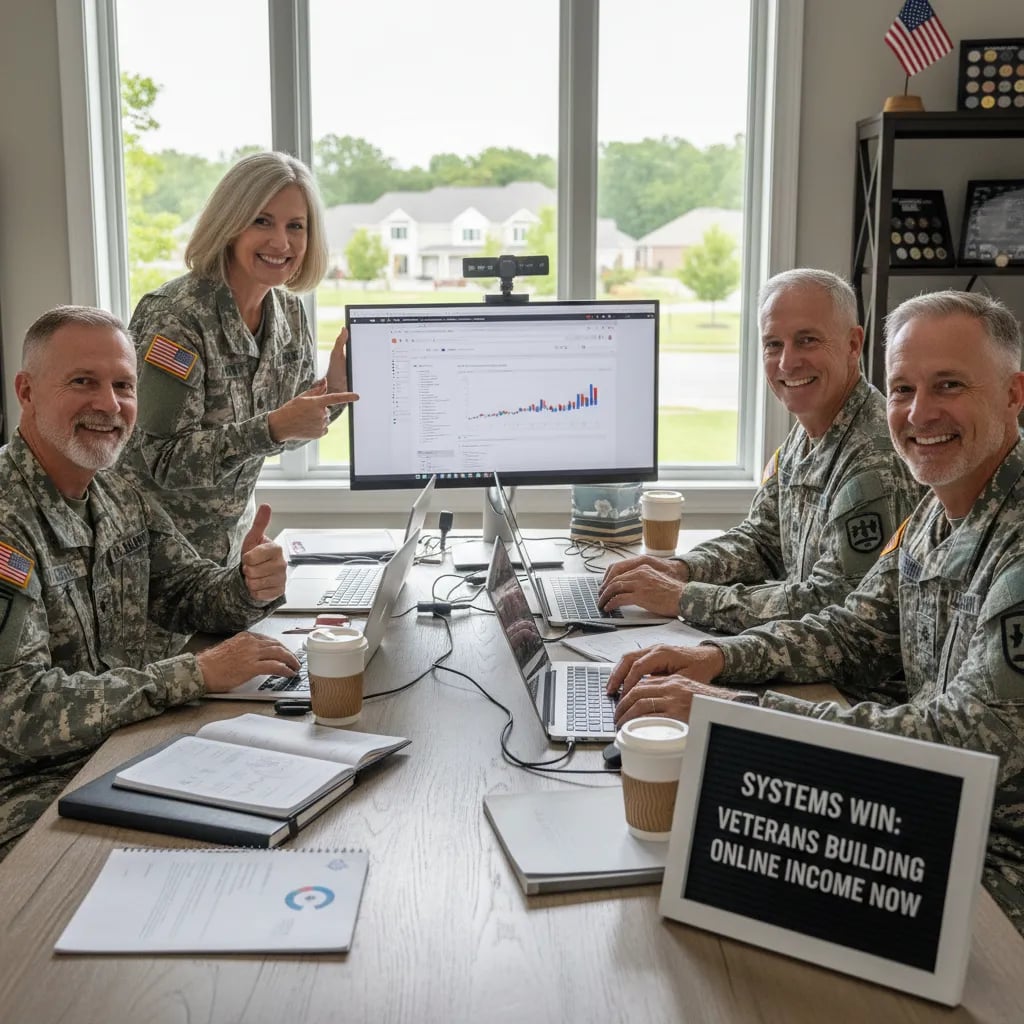
I used to wake up thinking motivation would carry me through a launch. It didn’t. As a veteran, I learned to trust checklists, SOPs, and repetition — not feelings. In this short post I’ll tell you why motivation is a trap, how systems (and an AI layer) win, and give practical steps tailored to veterans building online revenue streams in 2025.
1) Why Motivation Is a Trap (Short, Real, Personal)
Motivation feels good. Until it disappears.
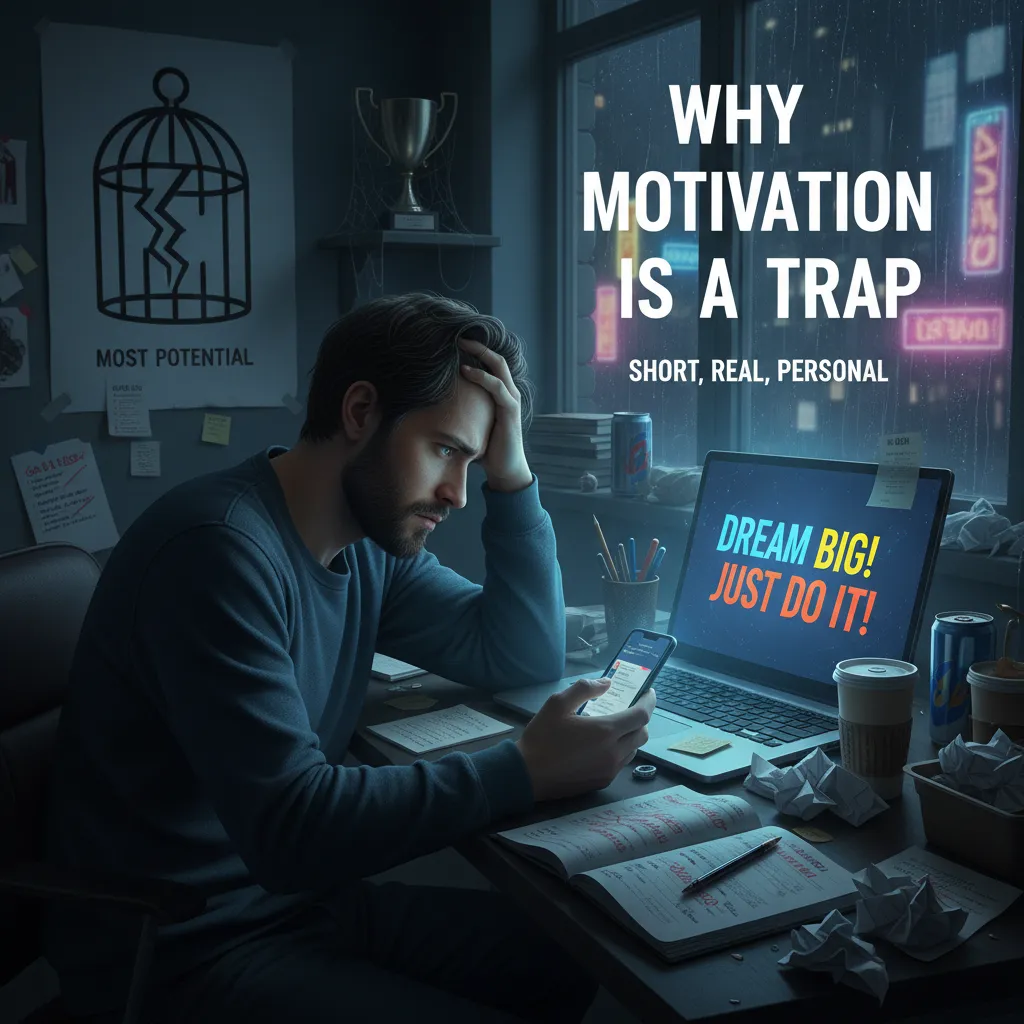
I’ve launched on motivation before—and crashed the moment my mood changed. One night I stayed up late “getting ahead” on a new offer. I told myself I was locked in. Then the next day hit: bad sleep, high stress, and way too much caffeine. My brain felt loud, my patience was gone, and the work that looked easy at midnight felt impossible at 9 a.m.
That’s the trap. Motivation isn’t a plan. It’s a feeling.
Motivation Is Mood-Dependent (And Mood Is Unstable)
In real life, motivation rides on things you can’t control perfectly:
Sleep (or lack of it)
Stress (family, bills, health, work)
Caffeine (usually trying to fix the first two)
When those swing, your output swings. That’s not a strategy for building Online Revenue Streams—especially for Veterans in 2025 juggling transitions, appointments, and normal life.
Sarah Robbins, Veteran Entrepreneur: "Relying on motivation is like planning around the weather — sometimes it’s sunny, sometimes you don’t leave the tent."
In Uniform, We Didn’t Wait to “Feel Ready”
What hit me hardest is how different this is from service. In uniform, I didn’t get to negotiate with my mood. We ran on process, structure, and repetition. You show up. You follow the checklist. You execute the standard.
That’s why Military Skills Leverage matters online. Veterans already understand how to perform on low energy days because we trained that way. We didn’t rely on hype. We relied on habits.
The Real Problem With Motivation
Motivation makes you start fast, then disappear when life hits. A business can’t run on “when I feel like it.” It needs something steadier than emotion.
2) Why Systems Always Win — A Practical Breakdown
When I started looking at Online Business Startups, I thought I needed more motivation. Then a bad week hit—poor sleep, family stuff, and zero energy. My “drive” disappeared, and so did my progress. That’s when it clicked: motivation is a mood, not a Business Plan.
A system is different. It keeps moving even when I’m tired, when life hits, and when I don’t feel like doing anything. Simple systems also cut decision fatigue, which means I stop burning mental energy on “what should I do today?” and just execute.
Lt. Col. Mark Hale, Small Business Mentor: "You don’t wait to feel like doing the job — you follow the checklist and get the mission done."
My Basic Repeatable System (The Only Parts That Matter)
I built my first real system around one simple framework:
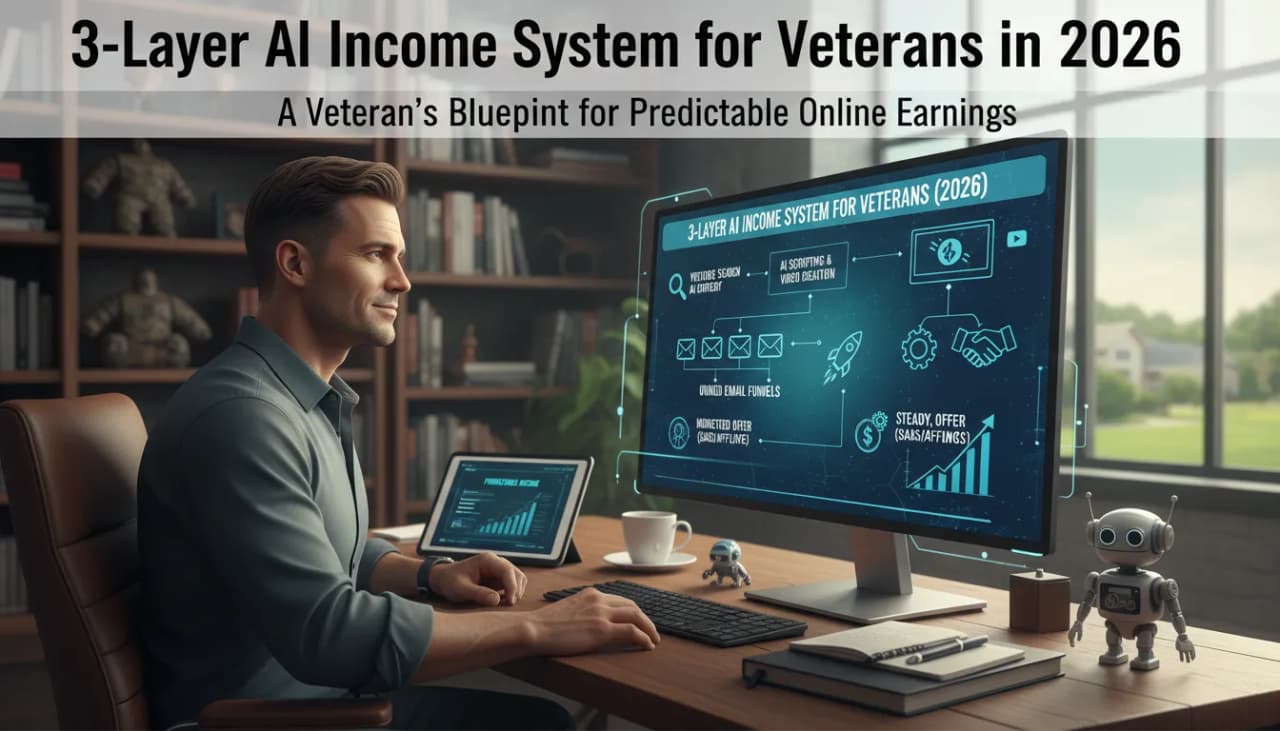
1 core offer + 1 traffic source + 1 follow-up sequence = repeatable system
One core offer: one clear result I help people get (no extra services).
One traffic source: one place I show up daily (not five platforms).
One follow-up sequence: a set of messages/emails that runs the same way every time.
The 90-Day System I Ran on Autopilot
I set up a 90-day schedule that produced steady leads regardless of mood. I posted on the same platform, at the same time, using the same content template. Then my follow-up sequence handled the repetition. The result wasn’t hype—it was consistency.
Weekend Sprint: Build Your System Like an SOP
Pick one offer from your best Business Ideas Veterans can deliver fast.
Choose one traffic source you can commit to for 30 days.
Write a 5-message follow-up sequence and reuse it.
Turn it into a checklist and run it daily.
Veterans already know SOPs create repeatability. That’s what scales into a real business.
3) The Veteran Advantage — Translate Service Habits into Income
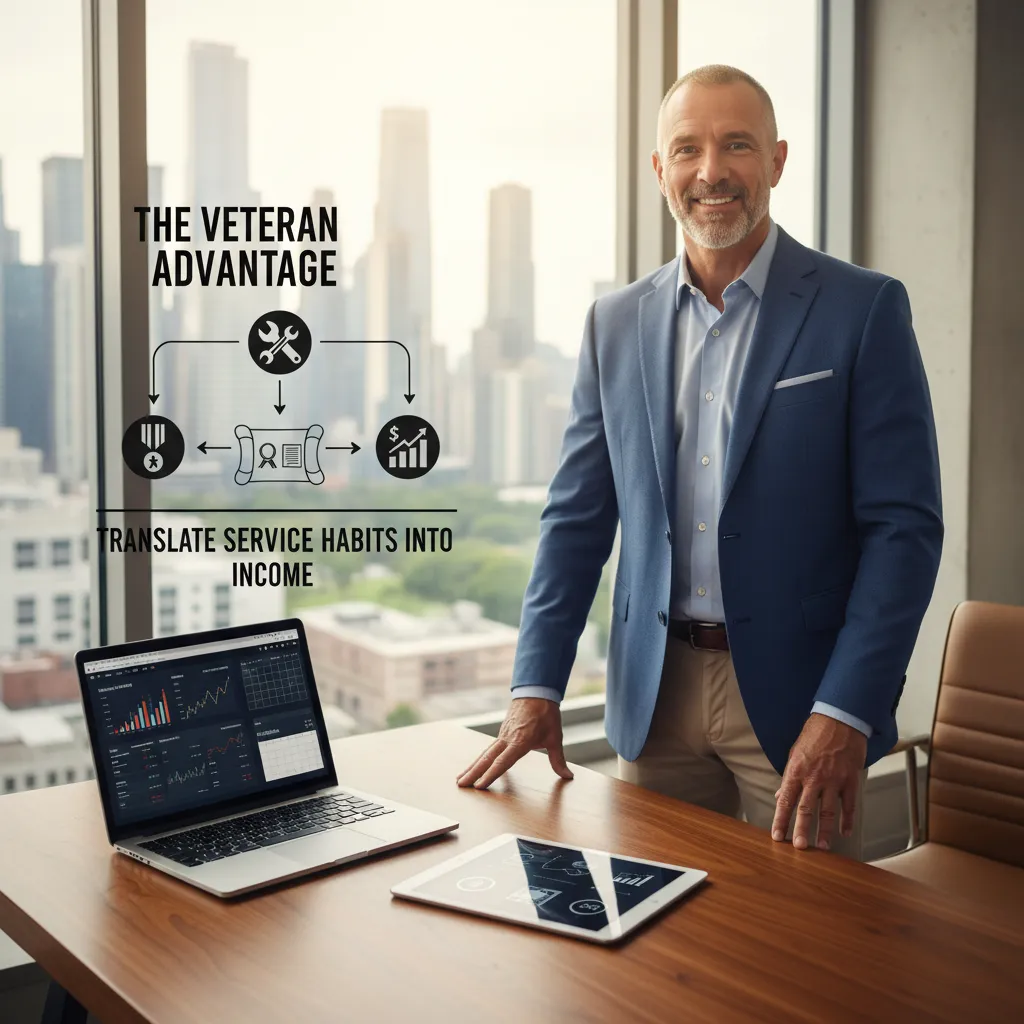
When I started looking at online income, I noticed civilians kept waiting to “feel ready.” I didn’t have that luxury in uniform. I had SOPs, checklists, delegation, and automation. That’s not military-only stuff—it’s how E-Commerce Stores and Cybersecurity Services stay consistent when life gets loud.
Emily Torres, E-commerce Strategist: “Veterans bring supply-chain discipline and real-world credibility — that's a conversion engine in niche markets like tactical gear.”
Tactical Gear E-Commerce + Veteran Owned Businesses = Trust That Converts
Tactical Gear E-Commerce isn’t a tiny corner of the internet. The outdoor/apparel/tactical gear market is about $22B. In physical product niches, veteran credibility can create a real lift—one insight shows a 15% sales increase when buyers see a veteran-owned signal. If you qualify, SDVOSB Certification can also open doors for contracts and partnerships, and it’s a strong trust marker for Veteran Owned Businesses.
Pick a Model That Matches Your Training
E-Commerce Startup (dropship or stocked): one offer, one supplier, one fulfillment SOP.
Cybersecurity Services: packaged audits, recurring retainers, clear scope checklists.
Coaching: one framework, one weekly call cadence, automated follow-up.
Memberships: recurring revenue with simple content systems.
Real Numbers Beat Hype
I watched a veteran-owned membership hit $14K/month with 800 members on Teachable—about 90% margins. I also saw a gear rental model run around 60% margins and reach $12K/month by sticking to a tight checklist: intake, inspection, shipping, return, repeat.
Resources + Time In Grade
I treat SEO like Time In Grade: it often takes 18–24 months to mature for e-commerce. While it builds, I’d lean on SBA programs, VBOCs, and SDVET LaunchPoint (Sept–Oct 2025) to tighten the system and shorten mistakes.

4) The AI Layer — The Practical Cheat Code
When I started building my Digital Business, my biggest problem wasn’t effort. It was the daily “what now?” loop. Every morning felt like a new mission brief with no SOP. That’s where the AI Powered layer became my practical cheat code—not to replace me, but to replace the repetition.
AI Powered systems remove the daily decision tax
AI is most valuable when it automates repetitive, high-frequency tasks. For me, that meant AI replacing:
Guesswork (what to post, what to say, what to send)
Manual posting (copy/paste, resizing, scheduling)
Constant decision-making (rewriting the same email 10 ways)
Once those were handled, I stopped asking, “What should I do today?” The system already knew.
My 70% busywork cut: content calendar + follow-up
I ran a simple experiment: I batched one week of content in one sitting, then used an automated content calendar and an AI-powered follow-up sequence. The result was about a 70% drop in daily busywork—mostly from scheduling, rewriting, and sending repetitive touchpoints. My focus shifted to managing the system, not feeding it.
The week it proved itself
Then a family emergency hit. Normally, my Online Revenue Streams would dip because I’d disappear. This time, AI handled the repetition: posts went out, emails went out, and basic replies were drafted for me to approve. My conversion stayed steady because the follow-up sequence didn’t care that my week fell apart.
James Liu, AI for Small Business Consultant: “When AI handles the repetition, veterans can apply their operational skills to strategy instead of tedium.”
Approachable AI tasks (with human oversight)
Content batching and scheduling
Email sequences and FAQ replies
Basic analytics summaries (what worked, what didn’t)
Important: AI is a tool. I still review brand voice and compliance—especially anything tied to claims like SDVOSB.
5) Simple System Example & Weekend Launch Blueprint
When I started helping other vets with Online Business Startups, I noticed the same pattern: we’d overbuild, then stall. So I went back to what worked in uniform—one mission, one lane, repeatable steps. That’s the Launch Blueprint: one core offer, one traffic source, one follow-up sequence, with AI doing the repetition.
Simple System (No Hype, No Chaos)
Offer: one clear result (example: “24-hour website audit for local contractors”).
Traffic: pick one—Facebook/Instagram ads or veteran groups and referrals.
Follow-up: one 3-step email/SMS sequence to Acquire Clients.
AI layer: drafts posts, rewrites ads, personalizes follow-ups, logs leads.
Alex Rivera, Veteran Business Coach: “A focused weekend launch is not glamour — it’s rehearsal. Repeat it, measure, then scale.”
3-Day Weekend Sprint Timeline
Day 1 — Niche Down + Message: pick one buyer, one pain, one promise. Write a simple hook and one CTA.
Day 2 — Build Platform: one-page site + checkout/booking. For an E-Commerce Startup, this can be a Shopify product page and basic policies.
Day 3 — Traffic Assault + Follow-Up: launch one ad set or post in 3–5 vetted groups. Use AI to create a 3-email sequence:
Value → Proof → Offer.
Tactical Aside: Pick Your Model
Dropshipping can be low-risk for testing demand, but margins are tight. A service (like cybersecurity consulting) needs a small portfolio and 1–2 case studies before you scale.
SEO Reality + Resources
Organic SEO is “time in grade”—plan 18–24 months for real e-commerce traction, then use paid traffic for early scale. Resources: SBA, VBOCs, SDVET LaunchPoint (Sept–Oct 2025), and Shopify guides.
6) Final Thought, CTA & Wild Cards
Veteran Business Outreach: The quiet win
I’ve learned this the hard way: motivation makes noise. It talks big, then disappears the moment sleep gets short, stress gets loud, or life hits. Systems make money. They don’t care how I feel. They run when I’m tired, when my calendar blows up, and when my confidence is low.
Here’s my imperfect human tangent: my desk is usually a mess. Not “aesthetic chaos,” just real chaos—sticky notes, half-charged cables, coffee rings. And somehow, that messy desk became the birthplace of discipline, because the system doesn’t live on the desk. It lives in the checklist, the follow-up, the automation, and the AI prompts that keep moving even when I don’t.
Rachel Kim, Veteran Transition Specialist: "The goal isn’t more hustle — it’s smarter systems that survive the bad weeks."
Online Income Veterans: Follow the journey
If you want to see how Online Income Veterans are using AI-powered systems to build income without grinding, follow the journey. No hype. Just execution.
Veteran Owned Brands: What if you took 6 months off?
Wild card thought: What if your system ran while you took 6 months off? Not because you’re lazy—because you built something resilient. That’s the point. Systems paired with AI reduce burnout and create income that doesn’t collapse during bad weeks.
I think of systems like field rations on long ops. They aren’t exciting, but they keep you moving when conditions aren’t. And if you’re building Veteran Owned Brands, don’t skip the support that speeds the launch: SBA programs, local VBOCs, and SDVOSB pathways—plus newer options like SDVET LaunchPoint (Sept–Oct 2025).
