
I used to wait for the fire-in-the-belly mornings. Then I spent four years in structured service roles and watched missions move forward regardless of how anyone felt. That rewired me. In business I now look for checklists, SOPs, and timelines before I look for inspiration. This post is the unromantic truth I wish someone had told me sooner.
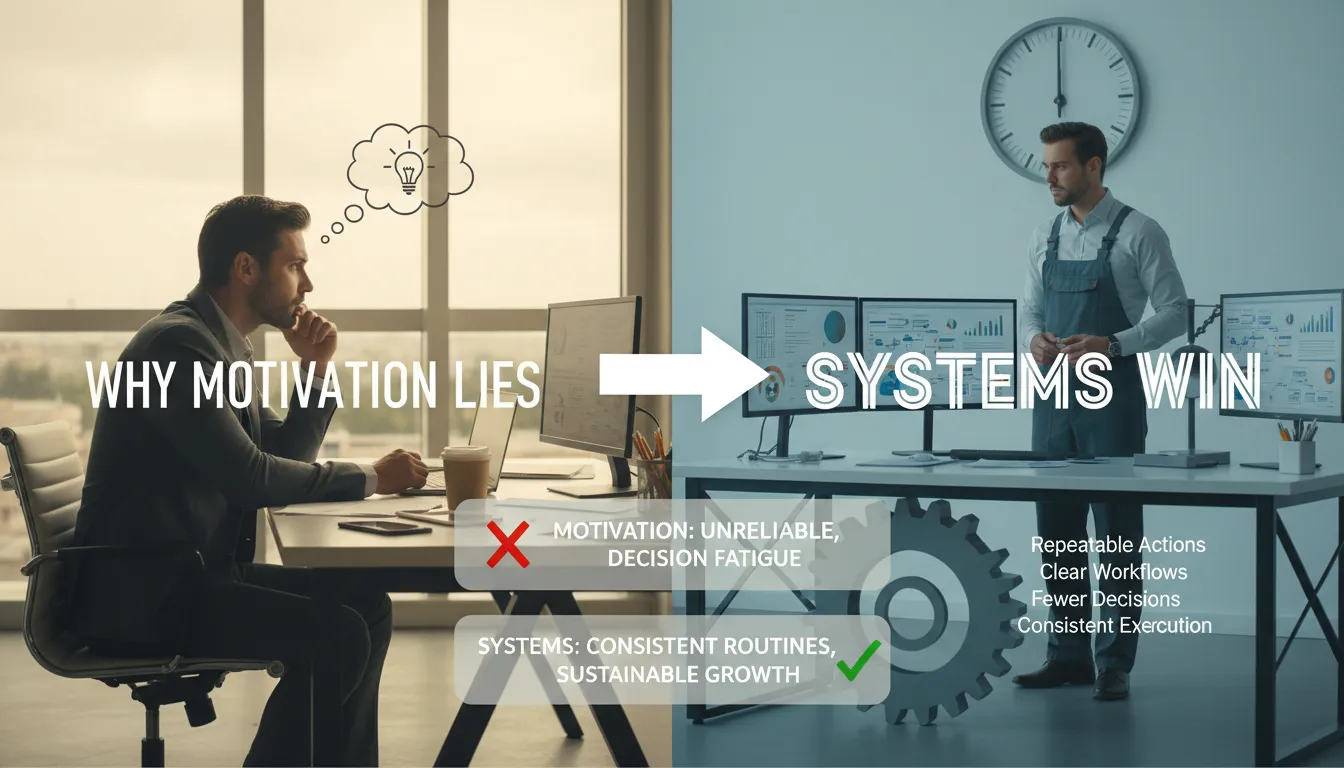
1) Why Motivation Lies — Systems Win
Motivation feels like progress, but motivation is unreliable
For a long time, I thought business success started with motivation. If I could just “get in the zone,” everything would move faster. And yes—motivation feels powerful. It feels productive. It feels like momentum.
But here’s the problem: motivation is unreliable. Some mornings I wake up ready to attack the day. Other mornings I’m tired, distracted, or dealing with life. When my business depended on how I felt, my results depended on how I felt too. That’s not a strategy—that’s a gamble.
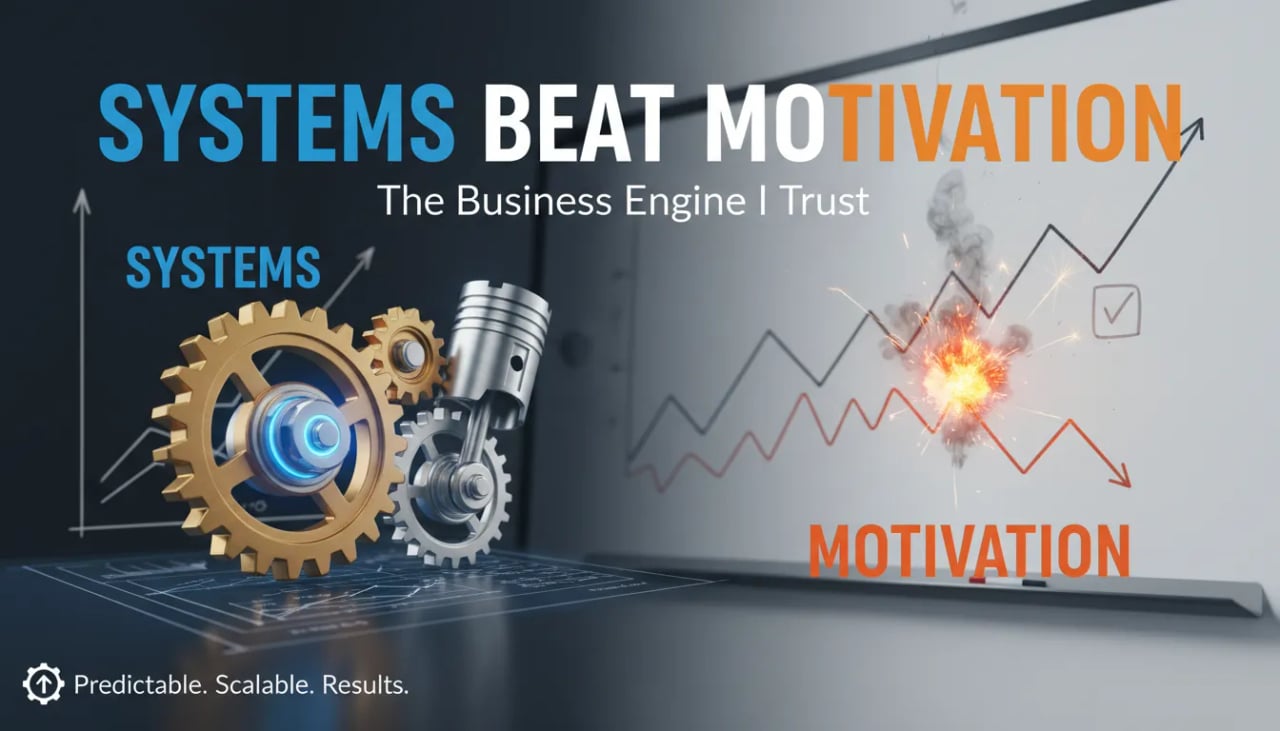
In the Systems vs motivation debate, motivation is the spark. It can start the fire. But it can’t keep it burning. Systems can.
The shift that changed everything: “What does the system require today?”
I stopped asking, “How do I feel today?” and started asking, “What does the system require today?” That small mental shift changed outcomes.
Because when I follow a system, I don’t need to negotiate with myself. I don’t need hype. I don’t need the perfect mood. I just execute the next step. That’s what creates consistent routines that function without relying on fleeting motivation.
James Clear: “Systems determine progress while goals only set direction.”
Systems reduce decision fatigue and protect your energy
Most entrepreneurs don’t burn out from hard work—they burn out from constant choosing. What should I do first? What matters most? What’s the best use of my time? That mental load adds up fast. That’s decision fatigue, and it quietly kills consistency.
Systems remove that pressure. They turn chaos into a checklist. They make the next move obvious. And when the next move is obvious, execution gets easier—even on low-motivation days.
What actually drives income (not vibes)
Business growth doesn’t come from hustle culture or “feeling inspired.” It comes from structure. On 2026-01-26, I wrote this reminder to myself: Motivation is a spark; systems are the engine. I still trust that.
When I build systems, I build a business that moves even when motivation fluctuates. And motivation fluctuates—always.
Repeatable actions that create predictable output
Clear workflows so nothing lives in my head
Fewer decisions so I don’t waste energy choosing
Consistent execution that compounds over time
That’s the real engine. Not hype. Not hustle. Not vibes. Just a system I can run—especially when motivation is unreliable.
2) Lessons from Service & British Cycling — Follow the Process
Accountability strategies I learned in service (even on low-motivation days)
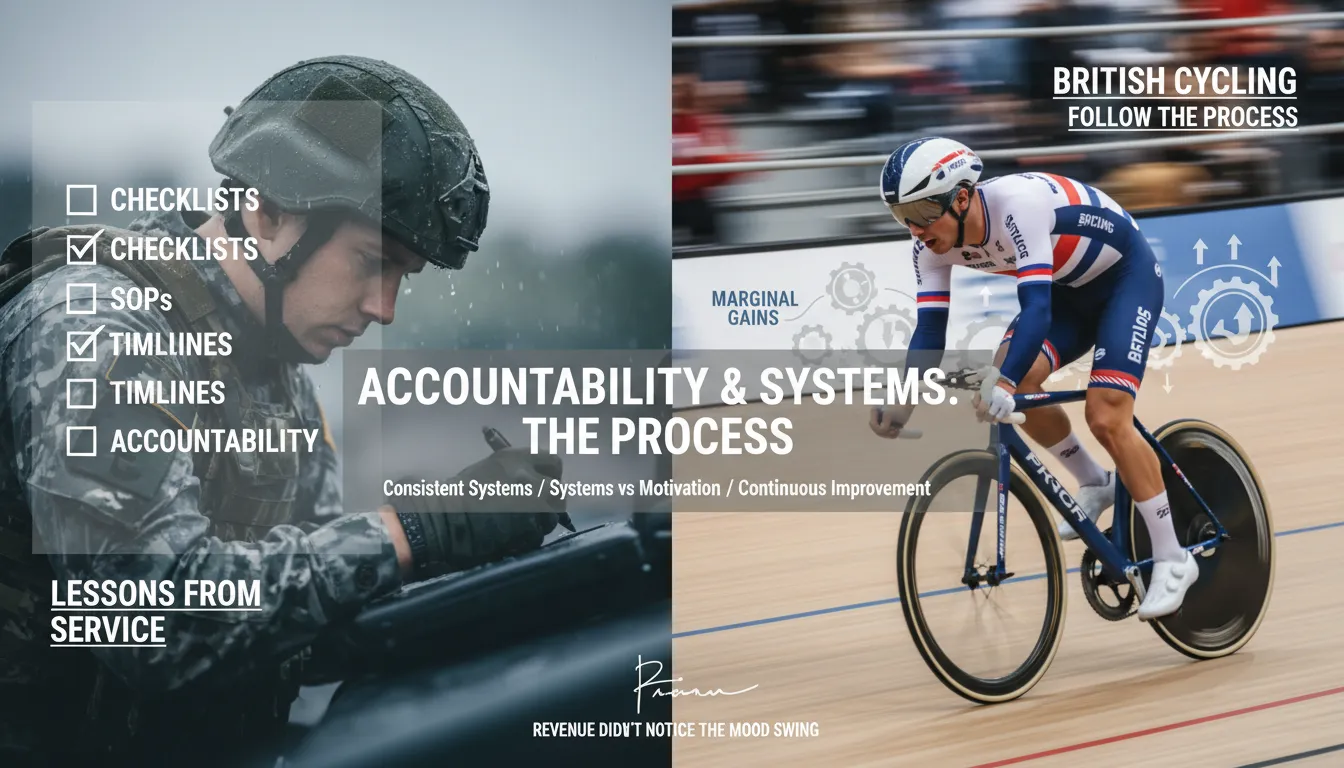
In service, motivation didn’t get a vote. The mission still moved. That wasn’t because we were “more driven.” It was because the process was non-negotiable. We had four tools that made execution automatic:
Checklists — so nothing important was left to memory
SOPs — so the standard stayed the standard
Timelines — so work didn’t drift
Accountability — so actions had owners, not excuses
That’s the heart of Systems vs motivation. Motivation is a mood. Systems are a method. When life gets loud—bad sleep, family stuff, stress—consistent systems keep progress moving anyway. And the best part is systems can improve over time. Success isn’t one big win; it’s continuous improvement in the way you operate.
British Cycling: marginal gains beat inspirational goals
British Cycling is one of the clearest real-world examples of systems winning. Their turnaround is often linked to a “marginal gains” approach—small improvements across many areas, aligned to shared goals, repeated daily. Not one big speech. Not one heroic push. A system.
That model matters in business because it matches reality: you don’t need perfect days, you need a process that adapts to imperfect ones. When your energy drops, the system still runs. When your schedule changes, the system still points you to the next action.
“Goals are good for setting a direction, systems are best for making progress.” — James Clear
That’s why I pay attention to systems-focused thinking in business writing too, like this 2025-09 piece on why success depends on systems more than motivation: https://yourstory.com/2025/09/success-depends-systems-motivation, and this 2025-11-28 article on why systems beat goals: https://onlydeadfish.co.uk/2025/11/28/why-systems-beat-goals/.
The week I stopped “getting motivated” and just ran the checklist
I remember a week where my mood was all over the place. One day I felt sharp. The next day I felt flat. Old me would’ve waited for the spark. Instead, I followed a simple 5-step checklist every workday:
Review pipeline and priorities (10 minutes)
Send 10 outreach messages
Follow up with every warm lead
Ship one deliverable or publish one asset
Log results and adjust tomorrow’s plan
Revenue didn’t notice the mood swing. The system carried the week. That’s what Deana Farrell meant when she said:
“Systems can be the quiet engine behind consistent business results.” — Deana Farrell
That’s the practical lesson I took from both worlds: build accountability strategies into the work, keep improving the process, and let consistent systems do what motivation can’t—show up every day.
3) How I Build Systems — Practical Steps I Use
I don’t build systems when I feel inspired. I build them so I can move without inspiration. The real shift for me was simple: stop asking, “How do I feel today?” and start asking, “What does the system require today?” That question removes emotion and reduces decision fatigue.
James Clear: "You do not rise to the level of your goals. You fall to the level of your systems."
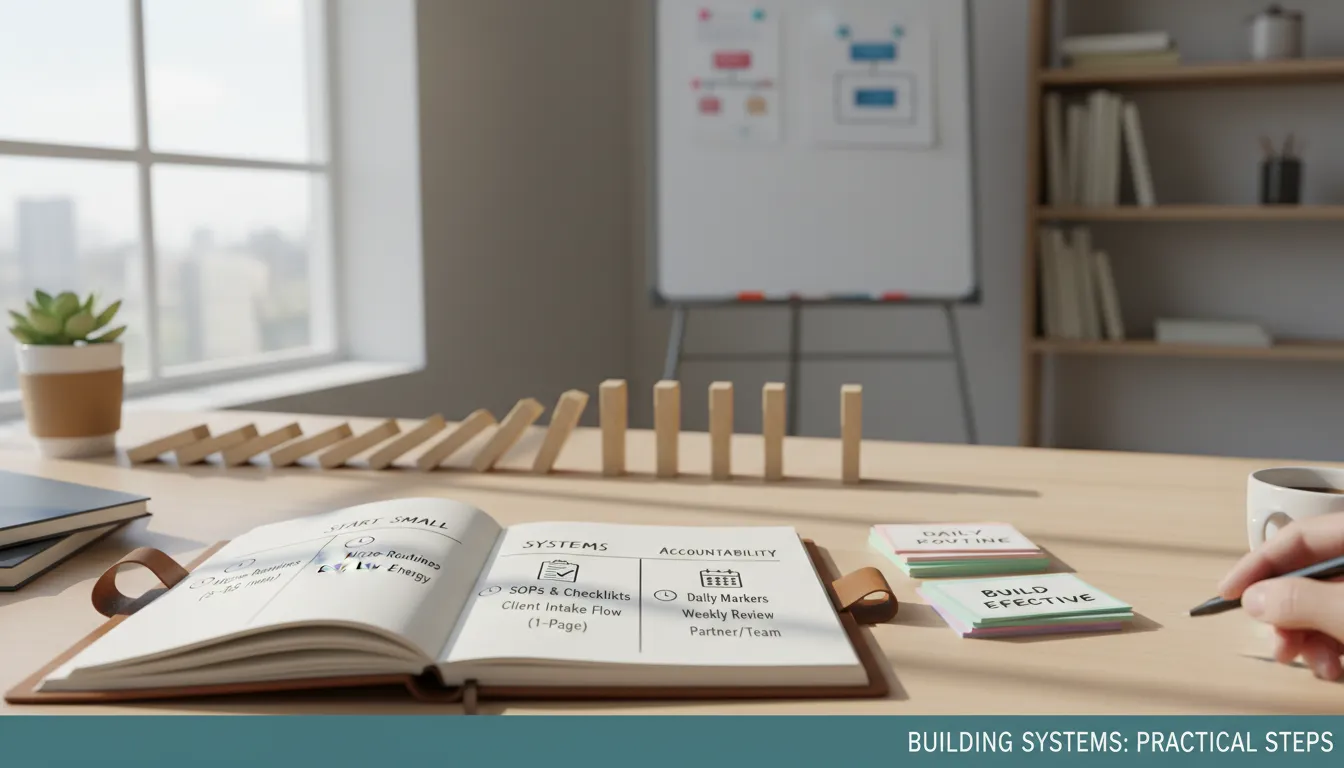
Start small: 5–15 minute micro-systems that survive low-energy days
If I try to build effective systems by aiming at a huge outcome, I burn out. Goals can create motivational valleys—long stretches where progress feels invisible. So I Start small and build micro-systems that create frequent progress markers.
5-minute “start” routine: open my task list, pick one priority, set a 25-minute timer.
10-minute pipeline check: review leads, send one follow-up, update one note.
15-minute content routine: write 5 bullets, draft one paragraph, or outline one section.
These Daily routines are small enough to do on rough days, which is the point. Small actions compound. Momentum doesn’t come from hype—it comes from showing up, even briefly, every day.
Use SOPs and checklists for anything I repeat
Anything I do twice becomes a candidate for an SOP. I keep an SOP library (simple folder + docs) and I write steps like I’m training a new teammate. This is how I build effective workflows and protect my focus.
My favorite example is a single-page client intake checklist. It saved me hours last quarter because I stopped re-thinking the same steps.
Collect basics (contact, goals, deadline)
Confirm scope + deliverables
Send invoice + agreement
Request assets (logins, brand notes, files)
Set kickoff call + timeline
When the work is repetitive, I don’t rely on memory. I rely on the checklist. That’s how Daily routines stay clean and consistent.
Accountability: daily markers, weekly reviews, and shared timelines
Systems work best with accountability. I use daily progress markers to keep the mission moving and a weekly review to adjust without drama. This keeps me out of “decision loops” and helps me focus on process, not mood.
Cadence | What I check |
|---|---|
Daily | One key output, one follow-up, one update to my tracker (Daily routines) |
Weekly | Wins, stuck points, next deadlines, and one system to tighten |
I also use timeline templates and share them with a partner or team member. If a date slips, we see it fast. That visibility keeps execution steady—and that steady execution is what compounds.
4) From Spark to Engine — Discipline, Momentum, and Freedom
Motivation is a spark. I love it when it shows up, but I stopped trusting it to run my business. Sparks are bright and fast, then they fade. Systems are the engine. And discipline business is the driver who keeps that engine humming, even when the day feels heavy.
Momentum Building Comes from Small Daily Wins
When I look back at my best months, they weren’t powered by one huge burst of energy. They were built by momentum building—small actions done so often they became normal. That’s the compounding effect most people miss. One day of “grind” doesn’t change much. But 6–24 months of steady systems? That changes everything.
I aim for 3–7 repeatable actions daily. Not because I’m trying to be perfect, but because repeatable actions reduce overwhelm. They give me a reliable roadmap when my brain wants to negotiate. I don’t ask, “Do I feel like it?” I ask, “What does the system require today?” That shift creates predictable results.
Continuous Improvement Is the Real Path to Long-term Success
Long-term success doesn’t come from occasional motivational peaks. It comes from continuous improvement in the systems that run your work. I treat my business like a machine that can be tuned. Every week, I look for one small upgrade: a clearer checklist, a tighter workflow, a better template, a faster handoff. That’s continuous improvement in real life—simple, steady, and repeatable.
Over time, continuous improvement turns effort into leverage. It also protects my focus. Fewer decisions. Less chaos. More execution. And the best part is that continuous improvement doesn’t require hype. It only requires honesty and consistency.
A Hybrid Approach: Use Motivation, But Don’t Depend on It
I still use motivation—just differently. When I feel a peak, I spend it on creative work: writing, strategy, big ideas. But I systemize everything else: outreach, follow-ups, content publishing, client onboarding, and weekly reviews. That way, I preserve willpower and keep moving even on low-energy days. This hybrid of systems and motivation works best because systems ensure daily wins, and daily wins keep the flywheel turning.
James Clear: "True freedom comes when your systems create predictable results, not when you chase feelings."
So, here’s how I’m closing this out: pick one system to automate this week, even if it’s small. Then set one accountability metric you can track daily. Keep stacking continuous improvement until your business runs with or without your mood. Motivation is a spark. Systems are the engine. Build the engine. Let discipline drive.
