
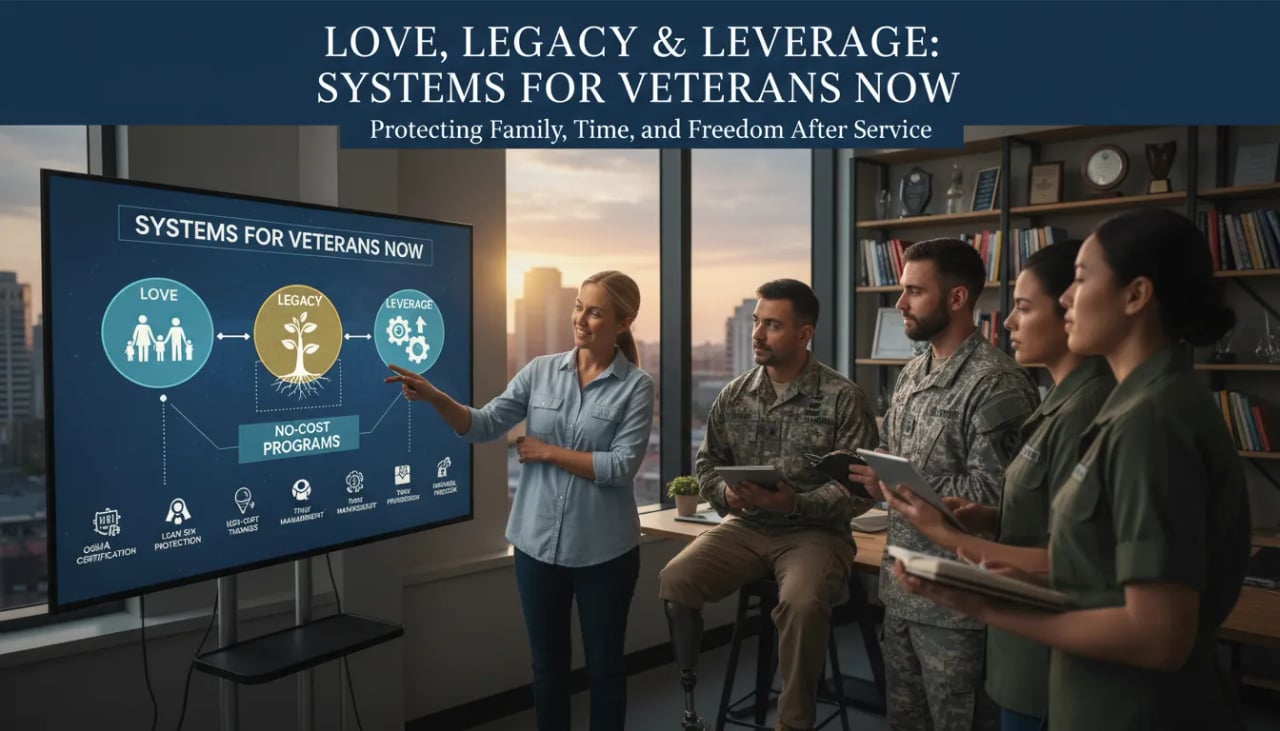


On Valentine’s Day I found myself holding a bouquet and a stack of pivot plans. I’d spent years protecting a perimeter; when I left service the perimeter disappeared and love — real, lasting love — demanded a different defense. This post is my attempt to translate the tactics that kept me alive on deployments into a quieter mission: protecting my family, my time, and my future. I write as someone who’s navigated the identity gap, leaned on systems when motivation faltered, and learned to build offers and workflows that outlast burnout.
1) Unpacking the Identity Gap: Who Am I Without the Uniform?
When I took the uniform off, I thought a civilian job would slide into place and give me the same structure. Same clear mission. Same chain of command. Same “do this, then that.” Instead, I got a title, a calendar full of meetings, and a quiet pressure to prove I still mattered. The job didn’t replace the system—I replaced the uniform with another grind.
That’s the identity gap. And it shows up fast, even when you have solid veterans transition support.
Signs I Was Filling the Gap With Work
Overworking because “busy” felt like purpose
Measuring my worth by a title instead of impact
Accepting unstable hours and calling it “paying dues”
Being home, but not really present for my spouse and kids
Why Identity Transfer Is So Tempting
In service, credibility, routine, and community are built in. In civilian life, you have to rebuild all three. So it’s easy to grab the next job and let it define you—especially if you’re chasing civilian careers success and trying to look “settled” on the outside.
But I had to ask myself the line that hit me like a gut check: “Are you building a career… Or are you building a cage?” Because a cage can look like a promotion with longer hours and less family time.
"Relearning identity after service isn't a step back — it's a strategic reset." — Lt. Col. Sarah Benson (Ret.)
Systems Beat a Single Employer
A good career transition program helps, but the real win comes when I stop anchoring my identity to one company and start anchoring it to a mission and repeatable systems: planning, boundaries, and routines that protect what matters.
Practical pathways help too—RecruitMilitary runs 100+ veteran job fairs annually, and BlackRock’s U.S. Veterans Transition Program offers a 6-month internship (applications open May 2026).
Quick Exercise (10 Minutes)
List 3 military skills: leadership, logistics, risk management.
Match them to roles: project manager, operations lead, compliance/safety.
Pick 1 daily habit that protects family time:
phone off 6–8pmorone dinner at the table.
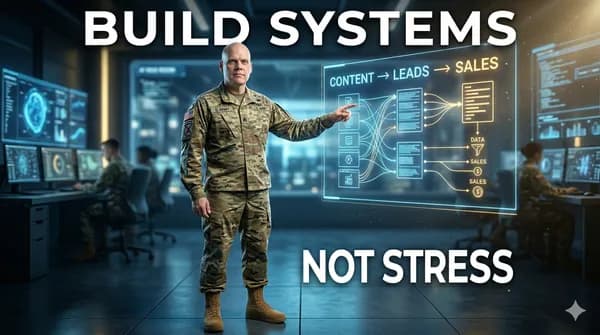
2) Why Systems Beat Motivation: Evergreen Over Viral
I once rode a week-long adrenaline high after a “viral” idea hit. Messages came in. Views spiked. People told me I was “on fire.” Then Monday showed up, the numbers dropped, and I felt that familiar crash—like coming off a mission with no next op order. That’s when it clicked: motivation is a surge. A system is a supply line.
"Structure beats adrenaline. Build systems that compound — not just moments that impress." — Michael Ortega, Veteran Career Coach
Empowering Veterans with a Simple Framework (Evergreen, Viral, Depth)
In the Freedom Accelerator Workbook Module 6, YouTube content gets sorted into three buckets: Evergreen, Viral, and Depth. That framework is gold for empowering veterans because it maps directly to how stable careers and income are built during military transition programs.
Category | Content Example | Business/Career Meaning |
|---|---|---|
Evergreen | How-to guides | Repeatable income systems + stable skills |
Viral | Trends, hot takes | Quick wins, unpredictable spikes |
Depth | Stories, Q&A | Trust, referrals, long-term support |
Mission-Essential Tasks vs One-Off Raids
Chasing viral wins is like running constant raids: high risk, high energy, and no guarantee of resupply. It creates burnout and inconsistency—especially when you’re already navigating veterans transition support, family needs, and a new identity outside the uniform.
Evergreen systems are different. They compound. One automated workflow, one repeatable offer, or one weekly process can protect your time the way a good SOP protects a team. Even “no cost programs” and certifications can be evergreen readiness—skills you earn once and use for years.
12-Week Action: One Platform, One Offer, One Workflow
Pick one evergreen activity you can repeat weekly for 12 weeks:
Choose one platform (LinkedIn, YouTube, or email).
Create one clear offer (resume help, coaching, a service).
Build one workflow:
post → DM → call → follow-up.
3) Tactical Planning: The 12-Week Action Plan in Practice
When I separated, I thought my discipline would carry me. Instead, I felt the system disappear overnight. My calendar filled with “figure it out” tasks, VA appointments, and family needs. Panic showed up fast. What fixed it wasn’t more hours—it was a short, intense planning cycle. I used the [Master Copy] 10K Fast Track 12… template and treated it like career transition training with deadlines.
"Treat your first 12 weeks like a deployment: clear objectives, concise reporting, and after-action review." — Capt. James Rivera (Ret.)
My personalized action plan (built from TAP/USO-style veterans transition support)
I kept it simple and personal—like the best personalized action plan tools in TAP and USO resources: one target, one offer, daily actions, weekly review. That structure replaced anxiety with progress.
Define the target audience: who I could help right now (not “everyone”).
Build one clear offer: a small consulting retainer translating MOS skills into civilian resumes, LinkedIn, and interview stories.
Deploy consistent daily actions: small reps, no drama.
Measure progress: lead and lag indicators.
Daily battle rhythm (quality over quantity)
I didn’t grind all day. I protected family time and left space for re-acclimation. My minimum daily standard looked like this:
30 minutes outreach (emails, LinkedIn messages, follow-ups)
20 minutes skill-building (portfolio, interview practice, or no-cost cert study)
10 minutes tracking (update metrics)
Tracking that proves momentum
I used a basic spreadsheet and sometimes a Trello board. The point was visibility.
Type | Examples |
|---|---|
Lead indicators | emails sent, calls booked, certifications started |
Lag indicators | clients signed, income, internship offers |
Pairing the plan with certifications gave me measurable momentum without big costs. And for targeted opportunities, I watched programs like BlackRock’s structured internship—built for veterans with 2+ years of service and under 5 years civilian experience (a 6-month runway with real structure). That’s what veterans transition support should feel like: clear objectives, not endless overtime.
4) Training & Certifications That Actually Move the Needle
When I first got out, I thought my service record would speak for itself. It didn’t. What changed the game was adding two simple credentials to my resume. After I completed free OSHA training and a lean six sigma yellow belt, my interview callbacks basically doubled. Same experience. Same work ethic. But now employers could “read” me in their language.
"Certifications are credibility currency in the civilian workforce — especially safety and process credentials." — Dr. Elaine Carter, Workforce Development Specialist
Why OSHA 10/30 and Lean Six Sigma Matter (Across Any Industry)
OSHA is safety. Lean Six Sigma is process improvement. Together, they translate military discipline into civilian value. OSHA 10/30 tells a hiring manager, “I can work safely and lead safely.” Lean Six Sigma tells them, “I can find waste, fix it, and measure results.” That combo works in warehouses, construction, healthcare, manufacturing, and even tech operations.
No Cost Programs That Count: VTS, USO, and Employer On-Ramps
Most vets don’t need more debt. They need no cost programs with a clear outcome. I’ve seen veterans transition support groups make this simple:
VTS often hosts no-cost OSHA 10/30 and Lean Six Sigma options.
USO Transition Program can connect you to free learning through Coursera/Skillsoft plus one-on-one support.
Some employers build structured on-ramps through training, mentorship, and internships (examples include Amazon, OpenAI, and a BlackRock 6-month internship; applications open May 2026 for those with 2+ years service and <5 years civilian experience).
My 90-Day Stack Plan (Safety + Process)
Week 1: Register for VTS VA Disability Filing Assistance (Feb 17, 2026) so benefits don’t lag.
Weeks 2–3: Complete VTS OSHA 30 (Feb 21–22, 2026).
Weeks 4–10: Earn lean six sigma yellow and run one small project (reduce errors, speed up a handoff, cut rework).
Quick Tip: Make Recruiters See It Fast
On LinkedIn, list certs under “Licenses & Certifications,” and translate MOS into job titles. I literally used a line like:
11B Squad Leader → Operations Team Lead (Safety + Process)
5) Family, Love, and Legacy: The Real Stakes
Veterans transition support starts at home
Valentine’s Day used to make me think about romance. Now it reminds me of something more real: presence. When I left the structure of service, I tried to replace it with more work—more hours, more shifts, more “just one more thing.” But my spouse didn’t need another long shift, and my kids didn’t need another “maybe next time.” They needed me.
I built one automated workflow so I could make the recital
The turning point was my daughter’s recital. I was about to miss it for a last-minute task, and I finally asked, “Why is my life still running on emergencies?” I chose one automated workflow—simple intake form, auto-confirmation, and a calendar block—so the work could move without me hovering over it.
That night, I sat in the front row. That’s not productivity. That’s legacy work.
"Presence is the strongest currency of all — you can rebuild a bank account, but not reclaimed time." — Maria Lopez, Family Transition Counselor
Automation protects time (and relationships)
Automation isn’t laziness. It’s protection. Here’s what actually helped me:
Shared calendar blocks for school events, date nights, and “no-work” zones
Outsourced chores when possible (even one small task frees mental space)
One weekly home ritual: a family dinner where phones stay off the table
We even wrote a simple “time protection” contract: what gets protected first, and what work can wait.
Financial stability tools: va work study, va home loan, and claims help
Family stability is a primary motivator in a systems-based transition, and the VA has real tools that can steady a household. Programs like va work study can support income while you train or study. VA home loan assistance can reduce housing stress. And getting organized support for VA disability filing can remove months of uncertainty.
Emotional support is real: family educational counseling
I also learned that family educational counseling exists through VTS/VA offerings. That matters, because the emotional cost of transition shows up at home first. The practical promise I’m chasing now is simple: build systems that let me say, “I’ll be there,” and mean it.
6) From One Platform to Scale: The Minimal Launch Strategy
When I left active duty, I tried to do what a lot of us do: build everything at once. Website, emails, content, offers—then wonder why I felt smoked by Wednesday. The fix was simple: one platform, one offer, one automated workflow. Minimal launches reduce cognitive load, and for anyone in a career transition program, that focus is the difference between progress and paralysis.
My Minimal Launch: LinkedIn + Resume-to-Placements + Automated Outreach
I picked LinkedIn because it’s clean for B2B and recruiter conversations. My offer was “resume-to-placements”—not just a resume rewrite, but a short system that moves a veteran from document to interviews. Then I built one workflow: automated outreach that protected my evenings for family.
Why Single-Platform Launches Work (Especially for Veterans)
Focus: one place to show up daily without burnout.
Measurable data: replies, calls booked, and placements tracked weekly.
Less admin: automation replaces repetitive tasks so you can think and lead.
"Start small with one platform. You’ll learn faster and sleep better." — Andre Thompson, Small Business Advisor
Simple Automations That Buy Back Time
I kept it basic:
Calendly for bookings
Stripe for payments
Zapier to connect forms → CRM → follow-up emails
New booking → Stripe paid → Zapier → intake form sent → follow-up scheduled
Platform Choices: Pick One Based on Your First Revenue
LinkedIn: recruiters, hiring managers, B2B services
Upwork: contract work to bridge income fast
Local VSO partnerships: warm referrals tied to job training services
Early Traction: Veteran Job Fairs + Employer Networks
RecruitMilitary runs 100+ veteran job fairs annually, and those rooms are pure demand. One veteran I worked with used OSHA + Lean Six Sigma certs, translated his MOS with RecruitMilitary resources, and landed a steady contractor role after one event.
Scaling Checklist (12-Week Cycles)
Timeline | Focus |
|---|---|
Weeks 1–12 | Validate offer + track ROI per platform |
Months 4–6 | Automate payment, delivery, follow-up |
After Month 6 | Outsource repetitive steps, duplicate to new platforms |
7) Action Steps + Resources: A Practical Checklist
When I left active duty, I didn’t need more hype—I needed a system. The fastest way I found to calm the noise was to treat my transition assistance program plan like an op order: clear tasks, clear dates, and simple metrics.
"A checklist with deadlines turned my anxiety into momentum — deadlines are tiny deployments." — Erica Nolan, Transition Specialist
Immediate Next Steps (Do These This Week)
Pick one platform (LinkedIn or YouTube). One place to show proof beats five places with silence.
Clarify one offer and name it. Templates I’ve used:
“MOS-to-Operations Consultant” or “Safety Implementation Advisor”.Enroll in one of the no cost programs that adds a credential fast (example below: OSHA 30).
30/60/90 Plan (Systems + Metrics)
Timeline | Mission | Metric |
|---|---|---|
30 days | Validate the offer |
|
60 days | Automate workflows |
|
90 days | Scale to a second platform |
|
Career Development Support: Programs & Events
Veteran Transition Support (VTS) — VA Disability Filing Assistance: Feb 17, 2026
VTS — OSHA 30 Training (no-cost training path): Feb 21–22, 2026
USO Transition Program — workshops and coaching (great transition assistance program add-on)
RecruitMilitary — 100+ job fairs annually (go to employer panels and ask about internships)
BlackRock — 6-month internship applications open: May 2026 (set a calendar reminder now)
Funding & Acceleration
HVRP grants: $23,000,000 total; awards $150K–$500K (ask local providers what’s available in your area).
Local VSO scholarships: small awards that cover exam fees, boots, tools, or training.
Networking + Proof (Make It Easy for Hiring Managers)
Update LinkedIn headline with your offer + credential.
Translate MOS into civilian outcomes (cost saved, time reduced, people led).
Document certs in one folder:
PDF certificate + course outline + 3 bullet results.
Self-Care as a System
Schedule weekly family time like an appointment.
Log wins daily (one line).
Run an after-action review every 12 weeks: what worked, what didn’t, what to change.
8) Wild Cards & Unscripted Scenarios (A Few Human Tangents)
What if your spouse needs to move?
Here’s a wild card I didn’t plan for the first time: my spouse got a work opportunity in another state. Old me would’ve panicked and doubled down on overtime. New me opened my 12-week plan and asked, “Is this built to move?” If your income depends on one zip code, it’s fragile. So I started building geoflexibility: remote-friendly work, a portable offer, and a simple routine I could run from a kitchen table or a hotel desk. That’s real veterans transition support—not just getting a job, but staying steady when life shifts.
A cheesy tip that works: write a love letter to future you
I wrote a short note to the version of me who’s tired, angry, and ready to quit. I pinned it to my plan like a mission card. It said, “Don’t trade your family for a paycheck again.” It felt ridiculous. It also kept me honest on the hard days.
“Sometimes the smallest operational change saves the largest relationship.” — Major Tom Ellis (Ret.)
My weird hack: run family life like a mission
I started doing mini-briefings for the week: who’s driving, what nights are protected, what “no-go” looks like. Then I use checklists for mornings, and a tiny AAR on Sundays: what worked, what didn’t, what we’ll change. The log is messy. That’s fine. Progress is allowed to be imperfect.
If PTSD or homelessness hits, don’t white-knuckle it
Some wild cards are heavy. If PTSD spikes, or housing becomes unstable, there are real resources for homeless veterans reintegration. The Homeless Veterans’ Reintegration Program (HVRP) exists for crises and comebacks, with $23,000,000 in total funding and awards ranging from $150,000–$500,000 to support services—including for homeless and justice-involved veterans. Certifications and internships can also create a clean career pathway when you need a reset.
Micro-story: the recital
I showed up late, in a wrinkled shirt, still thinking about work. My kid scanned the room, found me, and smiled like I’d moved a mountain. I didn’t. I just came. That’s the point. Imagine a world where your systems create more family time than your uniform ever did. Tell me in the comments: what’s one small victory you had this week?
